


Column: Struggle continues to revise California’s marquee environmental law - The San Diego Union-Tribune
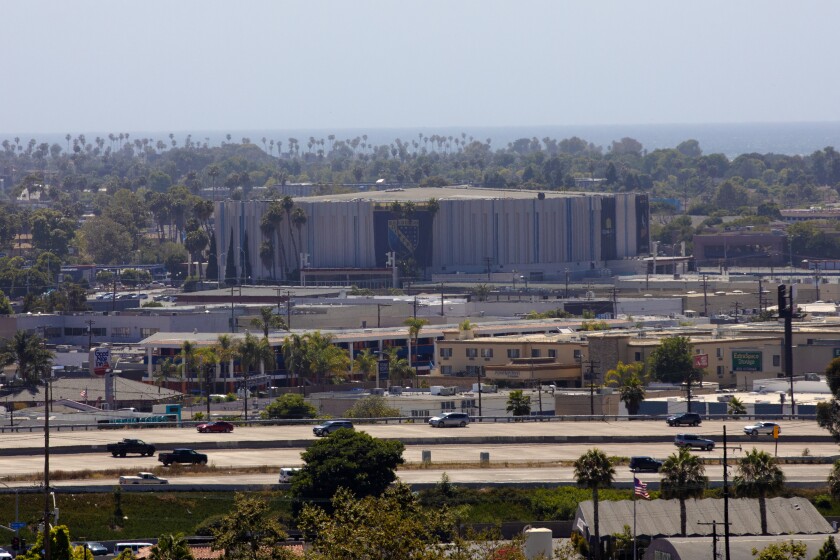
Efforts to streamline or strengthen CEQA come amid housing crisis and disputes from Berkeley to San Diego
Fifty years ago, the California Supreme Court issued a landmark decision that affects development across the state to this day.
The justices made clear that the California Environmental Quality Act applied not just to public projects, as some of its drafters had intended, but to private projects that require governmental approval — which means just about all development.
That history tends to get lost in the decades-long debate about whether CEQA remains a national standard for environmental protection, or has become an unwieldy and cumbersome law that, in the view of some, has become counterproductive to its goals.
Arguments over whether CEQA is a blessing or a curse have been a constant for decades in California politics, whether it pertains to the size of student populations and the lack of housing for them at UC Berkeley, or the star-crossed plan for potential high-rise development in San Diego’s sports arena area — or all sorts of public and private development in between.
None of this is to suggest the state’s high court erred in its 1972 interpretation of the law signed by Gov. Ronald Reagan two years earlier, despite his administration’s insistence that it did. It’s hard to imagine what potential environmental nightmares California would have faced if CEQA wasn’t broadly applied to force assessment of the impacts of development and lead to mitigating measures.
Even with the law in place, much development has brought negative impacts along with whatever benefits were promised, whether it be housing or revenue-raising commercial endeavors.
The problem is, for all the good CEQA has done, claims have grown for years that it has been abused to wage lawsuits to block worthy projects and extract unrealistic conditions. On the flip side, of course, are those who view developments as detrimental to their community and say they should not exist, or that there should be more roads and parks or even a prevailing wage for those who build them.
CEQA hadn’t been on the books very long when there was a push to expand its parameters beyond what most people had assumed. A lawsuit, Friends of Mammoth vs. Board of Supervisors of Mono County, turned out to be the vehicle to test the law’s boundaries. The county did not comply with CEQA before approving a condominium project and the lawsuit said it should have.
The case involved a unique dynamic, with Attorney General Evelle Younger and Reagan, both Republicans, on opposite sides. Younger relied on the policy statements in CEQA stressing the importance of protecting the environment and evaluating environmental impacts of governmental action at all levels, according to a blog by the environmental law firm Remy Moose Manley.
Friends of Mammoth lost in trial court, but eventually won at the Supreme Court, which concluded that “to achieve . . . maximum protection the Legislature necessarily intended to include within the operation of the act, private activities for which a government permit or other entitlement for use is necessary.”
CEQA was rewritten to reflect the ruling, and the law guided the development process in California from then on.
Environmental protection remains a top priority of Californians, but there’s still a lot of discussion about whether CEQA needs a substantial update. The threat of litigation invoking CEQA is always there and environmental lawsuits against projects big and small often get attention.
But over the past 20 years, an average of 195 CEQA lawsuits have been filed annually, according to Anita Chabria of the Los Angeles Times. Chabria cited a report commissioned by the Rose Foundation for Communities and the Environment that said in recent years less than 2 percent of public building projects have been subject to CEQA lawsuits.
When it comes to litigation regarding infill projects in developed areas and so-called “greenfield” projects on open land, real estate experts at the law firm of Holland & Knight suggest the notion that CEQA combats sprawl is overblown. Between those two types of projects, they say that 80 percent of infill developments are the targets of CEQA lawsuits versus 20 percent for greenfield developments.
Those statistics, and their context, have been challenged. For one thing, infill projects tend to be smaller, sometimes much smaller, than planned subdivisions, so there are a lot more of them.
Regardless, the state and many local governments encourage more dense development around existing neighborhoods, which in theory puts people closer to services, transit and, ideally, provides easier access to jobs in ways that lessen the negative environmental impacts of car trips.
M. Nolan Gray, a professional city planner and housing researcher at UCLA, goes beyond the numbers. He makes a rather audacious claim about that trend of infill development challenges, along with CEQA lawsuits against certain infrastructure projects — such as bike lanes in San Francisco.
“In this way, CEQA has the effect of encouraging urban sprawl,” he wrote in The Atlantic last year.
In San Diego County, however, thousands of homes planned for open land in rural areas have been stymied by environmental lawsuits and at the ballot box, while development in or near established neighborhoods has run into political and legal opposition as well.
Gray said CEQA guidelines have grown from a 10-page checklist “to a nearly 500-page tome, covering a range of issues including aesthetics.”
For those reasons and others, Jerry Brown during his second tenure as governor called for an overhaul of CEQA, and his successor, Gavin Newsom, has urged a fast-track environmental review process to keep projects from getting bogged down.
In his 2020 State of the State address, Newsom alluded to the quick approval for an arena in Sacramento and SoFi Stadium in Inglewood.
“In recent years, we’ve done a good job expediting judicial review on CEQA for professional sports. But it’s time we do the same thing for housing,” he said.
Meanwhile, there has been state legislation passed aimed at exempting certain low-income housing projects from the full CEQA process, along with establishing ministerial “by-right” approvals that also seek to streamline, if not circumvent environmental reviews. New legislation proposes to exempt student and faculty housing in response to a lawsuit that may limit enrollment at UC Berkeley.
This isn’t a one-way street. Building trades groups have defended CEQA, though have said they are open to some changes, and numerous environmental advocacy and social justice groups signed a letter in 2019 arguing that CEQA should be strengthened, according to CalMatters.
It seems everybody wants to revise California’s iconic environmental law, though there’s apparently a wide gulf about what needs to be done. Despite increasing pressure in recent years, no big changes have come out of the Legislature.
Should that eventually happen, one thing seems certain: CEQA is here to stay and it will never apply only to public projects in the future.
source: https://www.sandiegouniontribune.com/columnists/story/2022-02-23/column-struggle-continues-to-revise-californias-marquee-environmental-law
Your content is great. However, if any of the content contained herein violates any rights of yours, including those of copyright, please contact us immediately by e-mail at media[@]kissrpr.com.