


CSKT Water Rights Compact officially becomes law | News | charkoosta.com - Char-Koosta News
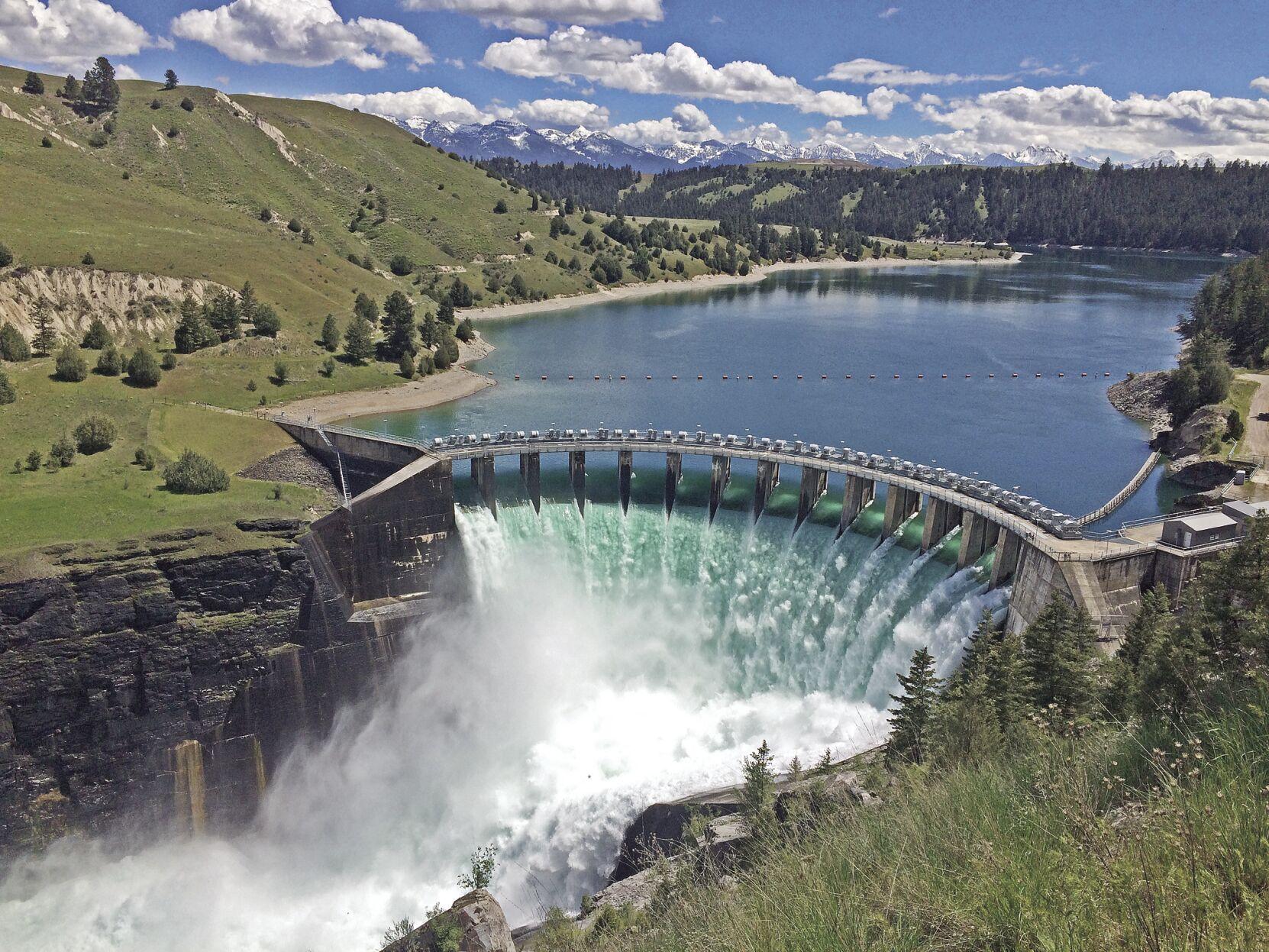
WASHINGTON — The U.S. Secretary of Interior Deb Haaland signed CSKT Water Rights Compact completing the federal process enacting the Compact. With the Secretary’s signature the Tribes may now commence with implementing the Compact and the companion Unitary Administration and Management Ordinance for the Flathead Reservation.
The Montana Water Rights Protection Act was signed into law in December 2020, however the effective date begins with the Secretary’s signature. CSKT’s Tribal Council and Montana’s Governor released a joint statement immediately following the signing.
“Our elders continually remind us to protect our water, and this day marks the beginning of the water compact implementation that will protect the water for all generations to come. The many people who worked on this, especially those who are no longer with us, I’d like to honor them for their efforts allowing us to reach this point. They were all instrumental in realizing this long-awaited vision,” said Confederated Salish and Kootenai Tribes Chairwoman Shelly Fyant.
“With the compact formally executed and with the Montana Water Rights Protection Act enacted into law, farmers, ranchers, the Confederated Salish and Kootenai Tribes, and all Montana water users will have the certainty they need about the use of one of our most precious resources, water,” said Montana Governor Greg Gianforte. “I am grateful for the leadership of Chairwoman Fyant, state legislators, and members of our federal delegation in Washington, D.C. for making the compact and the settlement a reality.”
The Settlement Act and the Compact quantify the Tribes’ water rights and authorize funding of $1.9 billion for a variety of purposes, including improving the water efficiency of the Federal Flathead Indian Irrigation Project, restoring and protecting Tribal resources, and constructing and maintaining community water distribution and wastewater facilities. The Flathead Irrigation Project, originally constructed in the early 1900s and an important economic driver for the Reservation and the state of Montana, has long been overdue for rehabilitation.
“Water is a sacred resource, and water rights are crucial to ensuring the health, safety and empowerment of Tribal communities,” said Secretary Haaland. “The Department is committed to upholding our trust responsibilities and delivering long-promised water resources to Tribes, certainty to all their non-Indian neighbors, and a solid foundation for future economic development for entire communities dependent on common water resources.”
A press release by Montana Jon Tester (D.-Mont) states, “The CSKT Water Compact will finalize the water rights settlement between CSKT and the State of Montana, resolve CSKT’s water-related claims with the federal government, and avoid costly litigation. Tester first introduced his Salish and Kootenai Water Rights Settlement Act in 2016 and welcomed newfound support for the Compact from his colleagues across the aisle in December of 2019. Tester’s historic bipartisan infrastructure legislation, which recently passed the Senate, would fully fund the agreement along with the already passed CSKT Water Settlement.”
“Today is a historic day for Montana taxpayers, ranchers, farmers, and Confederated Salish and Kootenai Tribes,” Sen. Tester said. “Water is life, and the Compact honors our trust responsibilities, creates jobs, and prevents decades of costly litigation while investing in infrastructure and providing certainty to water users everywhere. I am proud to have led the effort to get this Compact signed into law, and I will continue working with the Tribes and water users to hold the government accountable and ensure it is implemented quickly and effectively.”
Montana Senator Steve Daines (R-Mont.) was instrumental to bringing the CSKT Water Compact to Washington. “After years of bipartisan work to settle this century long water dispute, last week’s signing marks the final step to protect the water rights of all Montanans,” said Sen. Daines. “It will prevent costly litigation, create jobs, and support our farmers and ranchers across Montana.”
Following decades of litigation, the Settlement Act and the Compact provide an opportunity for a new era of improved relationships among the Tribes, the state, and irrigator communities in the area through a unique and carefully crafted framework that will clarify existing uses, allow for the establishment of new uses on the Reservation, and protect important fish and wildlife habitat in the region.
The water resources of the Reservation are one of the foremost assets of the Reservation, and Reservation residents depend on wise and stable regulation and appropriate use and conservation of this resource. Upon the Compact effective date notable changes in how water rights within the Flathead Reservation are governed will take effect including:
The establishment of the Flathead Reservation Water Management Board to administer and manage all aspects of water use within the Flathead Reservation. Two members of the Board will be appointed by the Governor of the State of Montana, two by the Tribes, and a fifth chosen by the other four.
The Water Board will have the authority to employ a Water Engineer to carry out the functions assigned by the Board pursuant to the new Unitary Administration and Management Ordinance.
The Unitary Administration and Management Ordinance will govern all water rights within the Flathead Reservation whether derived from tribal, state or federal law including all permitting of new uses, changes of existing uses and all aspects of enforcement of water rights within the Flathead Reservation.
The Ordinance allows Reservation residents to register certain existing uses of Reservation waters that are in existence on the effective date of the Compact and that meet the criteria established by the Ordinance.
The Ordinance allows the Tribes, their members and Allottees to register existing uses of the Tribal Water Right that were not quantified in the Compact such as stock water, domestic wells, and historically irrigated allotments held in Trust that are not served by the Flathead Indian Irrigation Project. Existing uses of the Tribal water that are properly registered within five years of the Compact effective date will have an 1855 priority date and will be valid enforceable. The Tribes Natural Resources Department will assist Tribal Members and Allottees in preparing registrations of Existing Uses of the Tribal Water Right for filing.
The Ordinance allows up to 180 days for a person to register certain State-law based existing uses that meet the criteria established in the Ordinance such as groundwater development for domestic and stock water purposes. During the interim period between the Compact Effective Date and the appointment of the Water Board the Montana Department of Natural Resources and Conservation will provide assistance to individuals in preparing registrations for filing with the Water Board.
Tribal members have the option of registering a qualifying Existing Use as part of the Tribal Water Right or as state-law based water right.
source: http://www.charkoosta.com/news/cskt-water-rights-compact-officially-becomes-law/article_034a76f0-1d7c-11ec-bf94-a73cc7549df9.html
Your content is great. However, if any of the content contained herein violates any rights of yours, including those of copyright, please contact us immediately by e-mail at media[@]kissrpr.com.