


Explainer: Gun Laws in Latin America's Largest Economies - AS/COA Online
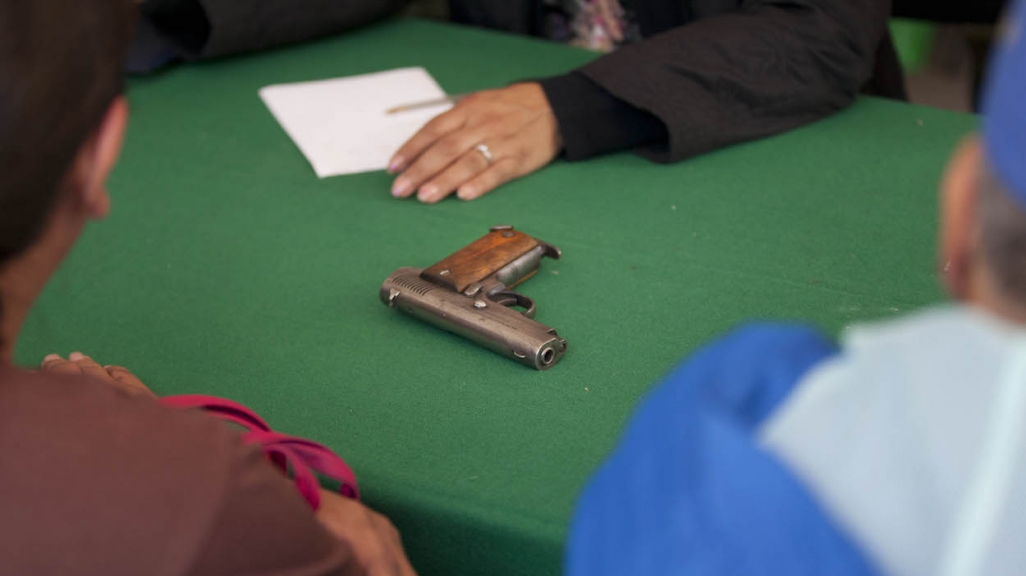
Civilian gun ownership is permitted in Brazil. To own a firearm, citizens must be at least 25 years old and register the weapon with the Federal Police. Only handguns and semiautomatics are authorized; assault weapons are illegal for civilians. Gun permits cost $26 and must be renewed every ten years, according to 2019 legislation. Penalties for illegal firearm possession range between one to three years in prison. In addition, Brazilian law outlaws the manufacture, sale, and import of toys and replicas of guns that could be confused with real weapons.
While Brazilians can buy guns, carry permits—authorizing the person to bring the weapon outside his home—are difficult to obtain. Applicants must provide a written declaration explaining the necessity of carrying the weapon, prove that they have no criminal background, and pass a mental health test with a government-approved psychologist. Carry permit seekers must also show that the individual received training to use a gun. The permits are valid for five years. Carry permits are authorized for members of the armed forces, police, prison guards, security officials, and transportation companies. Civilian-owned guns are prohibited in schools, government buildings, churches, and sports complexes.
Bolsonaro, who took office in January 2019, campaigned on a pro-gun message, contending that arming citizens would help reduce crime. He has passed nearly 30 decrees that weakened gun control, including increasing the number of firearms one can own from four to six, authorizing the carrying of up to two guns in public, doubling the amount of ammunition that can be purchased for certain weapons, and easing the licensing requirements for gun collections and hunters. The number of firearms legally purchased in Brazil has increased 65 percent since he took from office—from 700,000 guns in 2018 to 1.2 million in 2021. However, estimates suggest the total number of firearms in the country is 10 to 15 times higher.
Though not a constitutional right, personal firearm ownership is permitted in Chile for any resident over the age of 18. The extensive procedure for acquiring a weapon includes registering a home address with the national firearm authority (Directorate General of National Mobilization, DGMN), receiving psychiatric approval, and passing an official exam on the proper use and maintenance of firearms. A standard permit allows ownership of up to two weapons. An individual must apply for an additional license and provide justification in order to own more than two guns.
Furthermore, it is illegal to carry a gun out of a registered home address unless the person has a carry permit—another complicated document to acquire that includes additional psychiatric approval. All licenses need regular recertification. It is illegal for civilians to own semiautomatic weapons in Chile.
The national firearm authority conducted a public campaign in 2012 on the importance of the “responsible ownership of firearms,” asking Chileans to voluntarily register their weapons if they hadn’t done so and asking them to hand guns over, registered or not, to the police to be destroyed. By the end of the year 5,554 guns were destroyed, 47 percent of which had not been legally registered with the authorities.
In February 2015, then-President Michelle Bachelet signed a gun control bill into law, including new restrictions on gun sales, increased sentences for gun violations, and changes to gun registration. At that time, there were around 750,000 registered guns in the country. Under the law, carrying a defaced, sawed off, or otherwise illegally modified gun carries a penalty of between three to 10 years in prison, and a minimum of three years for those who provide guns to minors. Carrying an unregistered gun is punishable by a three- to five-year prison sentence. The law prohibits gun ownership for anyone with a criminal history. The law also made psychological evaluations and gun knowledge tests more stringent and also encourages citizens to turn in and destroy their guns.
Gun possession in Colombia is restrictive. The country’s Constitution of 1991 allows civilians the right to possess and carry a gun after obtaining a license, but in recent years presidents have issued decrees severely restricting carry permits. The Constitution also bans civilian-owned guns at political meetings and elections.
The country’s firearm regulations are governed by the Colombian legal system and penal code. Civilians 18 and older can purchase and carry small caliber handguns and shotguns with barrels of 22 inches or less with a license and for the purposes of self-defense. That said, higher caliber handguns, semiautomatic guns, and automatic guns are all prohibited, except in “exceptional circumstances.” To receive a permit for an automatic weapon to be used for personal protection, applicants must appeal to the Arms Committee of the Defense Ministry. All guns must be registered with the military, which maintains a national gun registry. The armed forces have a monopoly over the sale of weapons and ammunition and issue all gun permits.
To obtain a gun ownership license, valid for 10 years, applicants must pass criminal and mental background checks and prove their ability to use firearms. Carry permits are only valid for three years. Applicants for either the license or permit must prove the weapon is either necessary for self-defense or required for his or her profession. Illegal gun possession carries a sentence of between four to 15 years in prison. If a licensed gun owner is found guilty of domestic violence, the person may have his or her permit suspended or revoked.
Carry permits were first banned in Bogotá in 2012. In 2015, a nationwide ban on carry permits except for special circumstances went into effect and has been extended each year by executive decree. The most recent extension applies through December 31, 2021.
source: https://www.as-coa.org/articles/explainer-gun-laws-latin-americas-largest-economies
Your content is great. However, if any of the content contained herein violates any rights of yours, including those of copyright, please contact us immediately by e-mail at media[@]kissrpr.com.