


Historic Colorado liquor-law battles doom wine sales bill - Denver Business Journal - The Business Journals
At a time when Colorado liquor laws are again in a state of flux, the state’s 16 vintner’s restaurants still will not be able to mail their wine to residents throughout the state, as a legislative committee decided Wednesday that such a change may have to wait for a larger legal reshuffling.
Senate Bill 132, sponsored by Republican Sen. Bob Gardner of Colorado Springs and Democratic Sen. Rhonda Fields of Aurora, was the latest attempt to chip away at the state’s byzantine rules regarding who can sell what kinds of liquor in which locations, and the latest in a long line of bills in that area to fail. It’s part of a 14-year battle that’s kept up since liquor stores first were allowed to operate on Sundays — a battle that some thought would have ended with the “grand compromise” of 2016 but has shown itself only to pick up speed since then.
The measure would have allowed vintner’s restaurants — eateries owned by wineries that can sell not only their products but beer and spirits there as well — to use common carriers such as licensed delivery services to ship their products throughout the state as well. Currently, the roughly 160 Colorado wineries holding manufacturing or limited winery licenses can do just that, but the 2004 law that created vintner’s restaurants did not permit such shipping for them.
Sponsors and supporters of the measure, which included Denver winery restaurants such as Carboy Winery and Bigsby’s Folly Craft Winery, argued they are disadvantaged even against out-of-state wineries that can ship wine directly to Colorado residents.
Doug Caskey, executive director of the Colorado Wine Industry Development Board, argued that the measure would help Colorado’s sometimes overlooked $162.3 million industry, which suffers from the majority of its wineries being located on the Western Slope, four hours away from much of the state’s population centers.
“As much as it takes a good climate to grow good grapes and produce good wine, it takes a good business climate to grow this industry,” Carboy CEO Kevin Webber said.
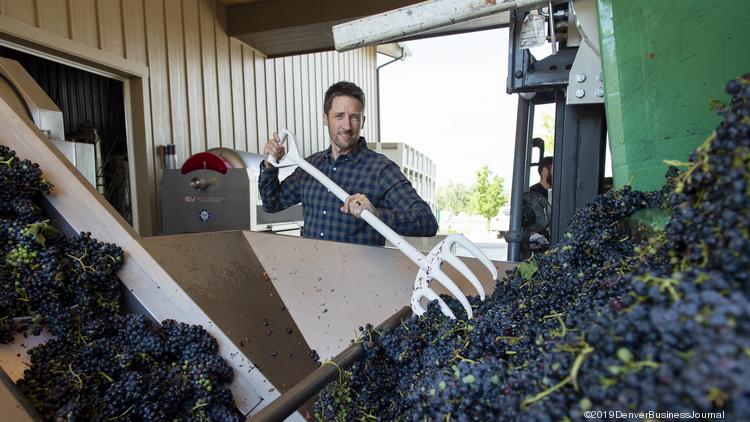
But like many subsectors before it that have asked for what it felt was a simple tweak to Colorado liquor laws, the vintner’s restaurants found opposition from just about everybody else that operates under existing state law. And they found numerous references to the 2016 bill that allowed liquor-store owners to hold more than one license under limited circumstances and that allowed grocers and convenience stores to begin selling full-strength beer for the first time in 2019 — a compromise that others said they agreed to even if they didn’t like it.
Organizations like the Wine and Spirit Wholesalers of Colorado and the Colorado Beer Distributors Association said they want to preserve what’s left of the three-tier system that requires manufacturing, distribution and sales of alcohol to be done by different companies.
Colorado Brewers Guild lobbyist Laura Long noted that a 2021 bill that extended the ability for restaurants to deliver to-go drinks through 2025 cut out breweries at the end of last year and said brewers oppose any law “that further tilts an already uneven playing field.”
And Kara Miller, lobbyist for the Colorado Licensed Beverage Association, gave a preview of what passing SB 132 might bring, saying that if vintner’s restaurants received this exception, the Colorado Distillers Guild would be back next year seeking the same change. And arguments like that seemed to affect legislators who otherwise were sympathetic to the restaurants.
“For me, this bill comes in premature,” said Sen. Rob Woodward, R-Loveland. “I want to see this change happen. But I haven’t heard enough testimony that convinces me that we should change the whole liquor-industry paradigm.”
SB 132 died in a 3-2 vote. As with most liquor bills, the votes crossed party lines, with Democratic Sens. James Coleman and Robert Rodriguez joining Woodward in opposing it over the “yes” votes of Democratic Sen. Chris Kolker and GOP Sen. Larry Liston.
Webber said in an email after the hearing that he was disappointed with the result but believes there remains a chance that the issue could be decided ultimately by ballot initiative rather than by law.
“Ultimately, we believe there’s still a path forward, but it’s probably with the people, not the Legislature,” he said.
The first big change in Colorado liquor law could come by ballot measure this year, as a coalition of grocers is seeking to put a question before voters that would allow grocery stores to sell wine.
But it’s clear that state leaders also aren’t just waiting to see how many more bills and initiatives will pop up to remake liquor-law infrastructure piecemeal.
Colorado Department of Revenue Executive Director Mark Ferrandino, a former House speaker, told a Joint Budget Committee briefing in December that he is hoping to get a bill introduced this year that would create a task force to review all existing liquor laws and recommend changes both far-reaching and minor in time for the 2024 legislative session.
While state leaders await that bill — which likely will be one of the more discussed task-force bills in recent memory — they expect more fights like Wednesday’s battle over SB 132 to be front and center.
“It’s going to be a challenging conversation,” Ferrandino said back in December, a statement that applied equally well to his plans and to Wednesday’s two-hour hearing. “And we need enough time to get past historic barriers to get to a new place.”
source: https://www.bizjournals.com/denver/news/2022/03/10/colorado-vintners-restaurants-dellivery-killed.html
Your content is great. However, if any of the content contained herein violates any rights of yours, including those of copyright, please contact us immediately by e-mail at media[@]kissrpr.com.