


Law to streamline nuclear siting injects uncertainty into state approval process - Casper Star-Tribune
The nuclear developer planning to build an advanced reactor in Wyoming before the end of the decade has overcome one hurdle: it’s now compliant with state law.
Wyoming lawmakers approved a bill two years ago that authorized utilities to build “small modular reactors” — plants with a capacity of up to 300 megawatts — at retiring coal plants. TerraPower’s plant in Kemmerer would have a capacity of 345 megawatts.
“There’s not a reading of that bill that would have allowed us to build our plant, because we just didn’t meet that threshold,” said Jeff Navin, director of external affairs for TerraPower.
A bill expanding the definition, which now includes any advanced reactor that “is an improvement over nuclear reactors placed in service before January 1, 2021,” passed during this year’s legislative session. Gov. Mark Gordon signed the bill into law Monday.
TerraPower is satisfied with the change.
“We’re very grateful that the Legislature moved as quickly as it did to make that legal change, to allow us to go forward,” Navin said. “We’ll continue to work with the Legislature as more of these kinds of questions come up.”
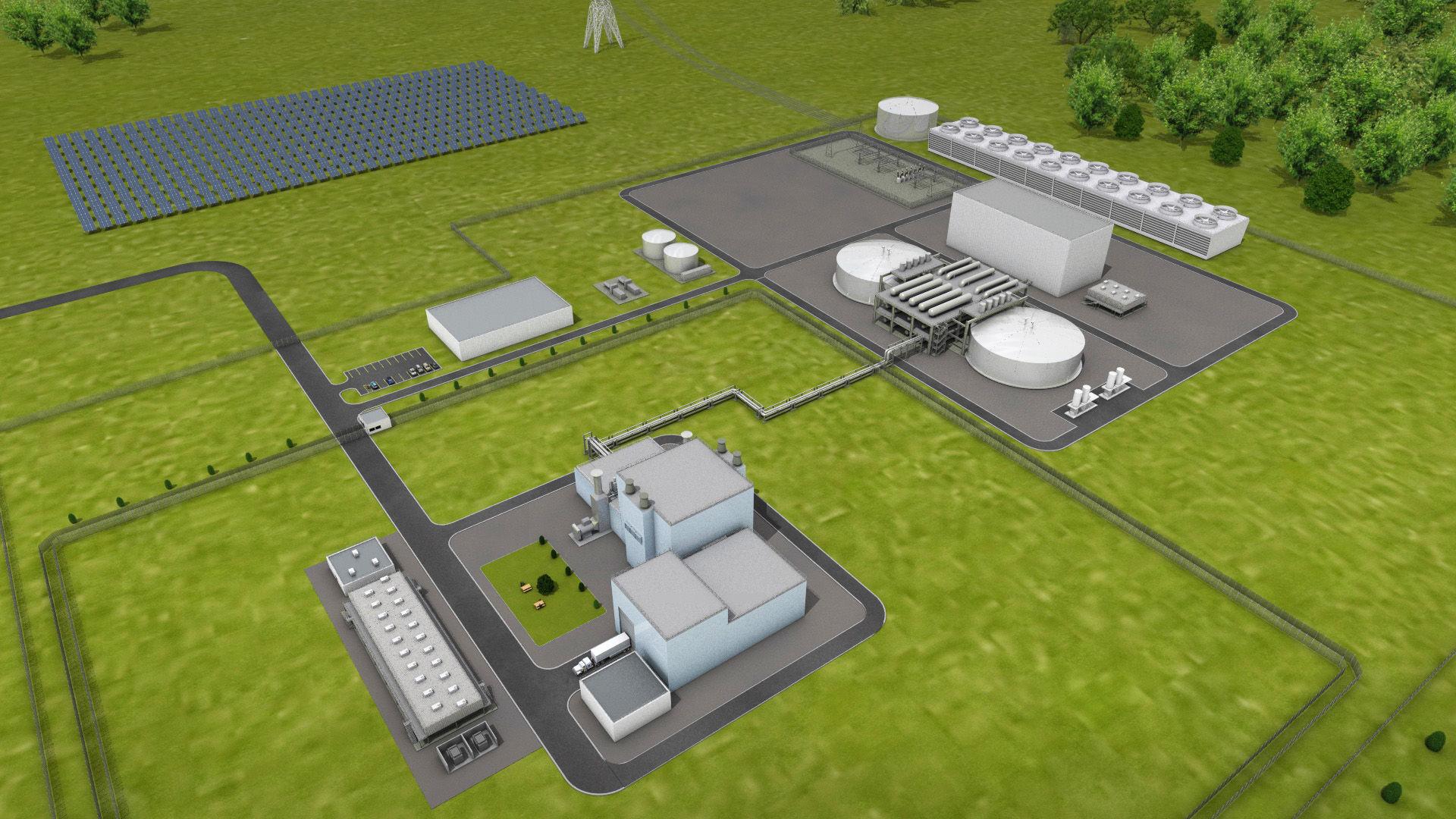
The bill also modifies several other statutes that address the siting of nuclear plants.
It requires nuclear developers to report anticipated benefits, like job creation, to the state, which TerraPower doesn’t mind doing.
“We want to be as open and transparent as possible,” Navin said. “We have no problem ensuring that the government of the state of Wyoming and the people in Lincoln County know what’s happening with the plant.”
With U.S. efforts to build a permanent nuclear repository stalled indefinitely, the bill lifts a restriction on the temporary storage of spent fuel before a repository is complete.
It suspends the state’s $5-per-megawatt tax on electricity production at nuclear plants through 2035, with an exemption after that date for facilities using at least 80% U.S. uranium.
And it limits the Industrial Siting Council’s ability to permit nuclear facilities, in accordance with federal law, which gives that authority to the Nuclear Regulatory Commission. Some in Wyoming, however, are less than thrilled.
Lawmakers’ aim was to avoid stepping on the toes of the Nuclear Regulatory Commission and avoid introducing unnecessary delays to TerraPower’s federally mandated seven-year schedule.
“It was pretty clear in the session that we — Wyoming — were willing to defer a lot of important local decision-making authority to the Nuclear Regulatory Commission,” said John Burrows, a conservation advocate at the Wyoming Outdoor Council. “Possibly more than we needed to.”
But conservation groups worry that the state may have relinquished too much of its permitting oversight.
Wyoming’s Industrial Development Information and Siting Act is meant to buffer the socioeconomic effects of building facilities like power plants. It’s possible that restricting its use could prevent the state from providing impact assistance payments meant to ease the strain on public services and infrastructure in host communities — an economic burden leaders in Kemmerer, the southwest Wyoming town of 2,800 chosen by TerraPower for the first reactor, are already nervous about.
It’s unclear to what extent the act will apply to advanced nuclear projects like TerraPower’s.
The newly enacted law isn’t intended to bypass state permitting altogether.
“The provisions of the Industrial Development Information and Siting Act,” it reads, “shall apply only to the extent that those provisions do not interfere with, contradict or duplicate any requirements of the United States Nuclear Regulatory Commission.”
But lawmakers proved reluctant during the session to safeguard any of the act’s components — even the impact assistance payments — and risk further complicating the delegation of authority among state and federal agencies.
According to the Outdoor Council, that’s not good enough.
“We understand there’s certain things that Wyoming can’t regulate, nor should it,” Burrows said. “But we should affirm the industrial siting act to the maximum extent possible.”
source: https://trib.com/business/energy/law-to-streamline-nuclear-siting-injects-uncertainty-into-state-approval-process/article_2f96309d-2990-5c35-b2a1-ed6cf3739929.html
Your content is great. However, if any of the content contained herein violates any rights of yours, including those of copyright, please contact us immediately by e-mail at media[@]kissrpr.com.