


Live updates: Texas' abortion law heads to SCOTUS - CNN
Sotomayor has emerged as the most vocal critic of the Texas abortion law
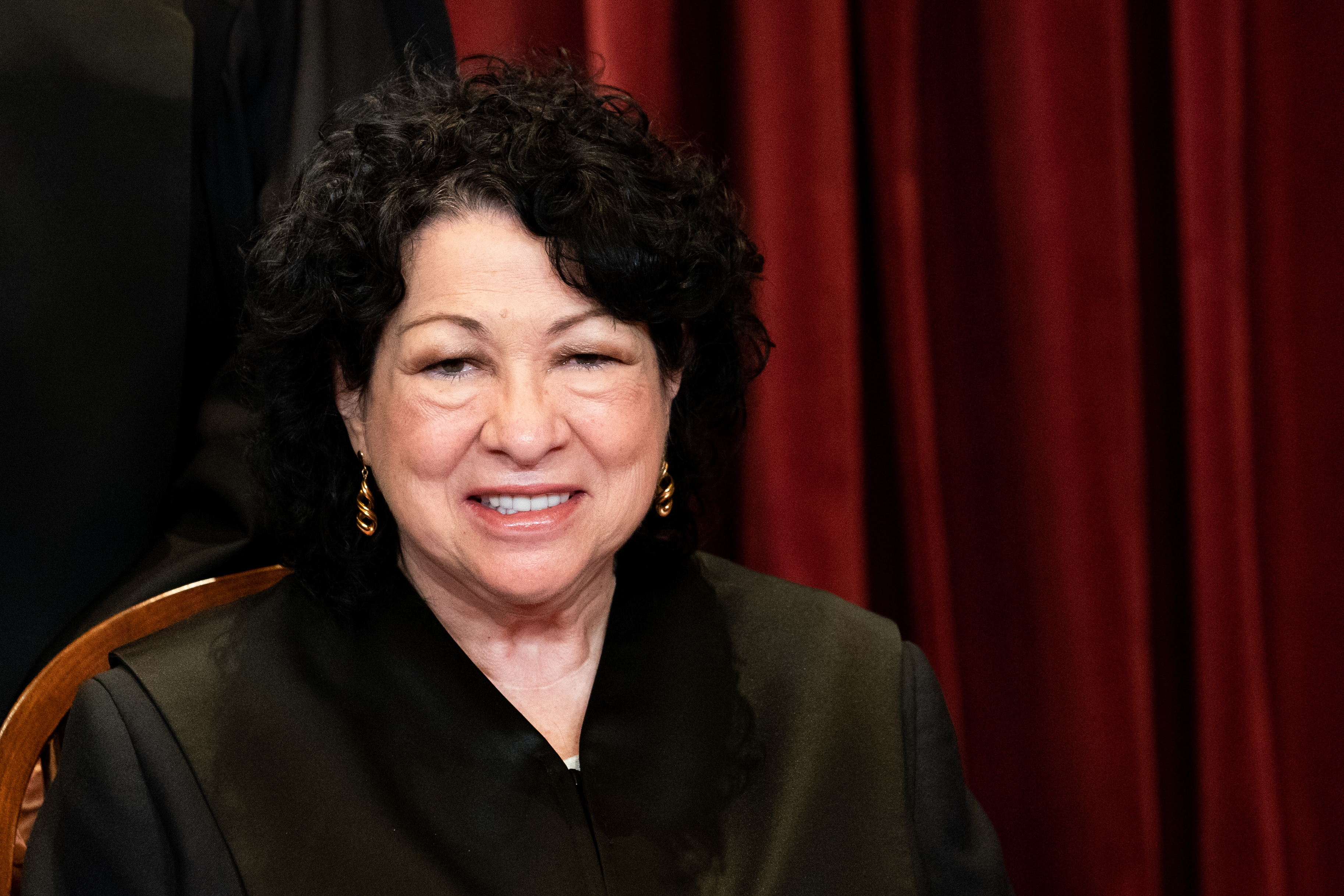
Liberal Justice Sonia Sotomayor has emerged as the most vocal critic of the law, and has been especially critical that her colleagues have so far allowed it to remain in effect. In her most recent dissent — last week, when the court allowed the law to stay on the books for the second time — she said that Texas, "empowered by this Court's inaction," has "thoroughly chilled the exercise of the right recognized in Roe."
Sotomayor was the only justice to say that the court should have immediately blocked the law. Liberals Elena Kagan and Stephen Breyer may have held their fire because they were placated by the fact that the court scheduled arguments so quickly or because they believe conservative votes may still be in play.
Meanwhile, "friend of the court" legal briefs flowed into the court Wednesday as parties attempted to illustrate the broad impact of its potential ruling.
Massachusetts Attorney General Maura Healey is leading a coalition of 24 attorneys general siding with the abortion providers in the state. In their brief, Healey detailed how clinics in neighboring states are overwhelmed with patients from Texas. Healey warned the justices that if they were to greenlight the Texas law, other states could draft similar laws in areas such as gun rights, marriage equality and voting rights.
Healey told the court that the states recognize the "vital role" that judicial review plays in resolving tensions between a state's policy preference and a constitutional right. "Where longstanding precedent clearly and unambiguously forecloses a particular policy as unconstitutional, a State cannot be permitted to disregard that precedent by passing an unconstitutional law and shielding it from judicial review," Healey argued.
Indiana and 19 other Republican-led states filed a brief in support of Texas, arguing that the district court that ruled in favor of the Department of Justice "threatens to expose every State in the Union to a suit by the federal Executive Branch whenever the U.S. Attorney General deems a state law to violate some constitutional right of someone, somewhere."
Although on Monday the justices will limit the dispute to procedural issues related to the law and not whether it violates court precedent, they will tackle the future of Roe v. Wade in a separate dispute in December. In that case, Mississippi is defending its 15-week ban and explicitly asking to overturn Roe.
The Supreme Court has been flooded with briefs ahead of today's oral arguments

The Supreme Court received a flood of legal briefs last Wednesday concerning Texas' six-week abortion ban, which has rendered Roe v. Wade a dead letter in the country's second largest state, in advance of today's oral arguments.
The filings come after the court agreed last month to fast-track an appeal from a coalition of abortion providers and lawyers for the Biden administration, who argue that the law is in clear violation of a nearly 50-year-old court precedent and represents the most restrictive ban in the nation. The court's move to expedite the dispute signals that the justices understand it to be among the most urgent cases the Roberts court has considered.
Critics of the law reflected that urgency by stressing the law's impact in Texas in the new briefs.
A lawyer for the Biden administration told the justices that the law was designed to "nullify" Supreme Court precedent and that "so, far it has worked." The government argues that the law has "effectively eliminated abortion in Texas" and represents a "brazen attack" on the "supremacy of federal law."
Abortion providers urged the justices to step in.
"Where, as here, a State enacts a blatantly unconstitutional statute, assigns enforcement authority to everyone in the world, and weaponizes the state judiciary to obstruct those courts' ability to protect constitutional rights, the federal courts must be available to provide relief," a lawyer for one of the clinics said.
S.B. 8, the law in question, bars abortions often before a woman knows she is pregnant and is in stark contrast to Roe v. Wade, the 1973 landmark decision legalizing abortion nationwide prior to viability, which can occur at around 24 weeks of pregnancy.
On Sept. 1, a 5-4 Supreme Court allowed the law to go into effect while legal challenges continued, causing a firestorm in the country as women scrambled to find ways to obtain reproductive care in Texas, overwhelming clinics in nearby states. Chief Justice John Roberts sided with the court's left wing in dissent, with the liberal justices calling the law "flagrantly" unconstitutional.
After the court's order, polls found that public opinion of the justices reached a new low and that only 1/3 of the country wanted the court to overrule Roe v. Wade.
Your guide to today's oral arguments: Here's who is speaking for each side
There will be two sets of arguments today at the Supreme Court at 10 a.m. ET.
The justices won’t be discussing whether the Texas law violates Roe v. Wade, they are limiting the discussion to the novel way S.B. 8 was written. It bars the state from enforcing the law, instead, allowing private citizens to bring civil suit against anyone they think may be helping a woman get an abortion.
A coalition of abortion providers and the Biden administration say this amounts to a “scheme” to keep challenges out of federal courts. They note that lawsuits in state court can only occur after a doctor has agreed to face draconian penalties by performing an abortion, and that the legal proceedings could take months to play out.
These are the key players of today's arguments and how the event is expected to unfold:
- A coalition of Texas abortion providers will go first today — represented by Marc A. Hearron, a lawyer for the Center for Reproductive Rights. The crux of his argument is that the providers have the legal right to sue Texas officials, state judges, clerks and private individuals. They say under normal circumstances a state would be immune from such lawsuits, but this case is different because the law was designed to avoid judicial review.
- Texas Solicitor General Judd E. Stone will then respond for Texas. He's expected to say that the lawsuit can’t go forward because Texas is not charged with enforcing the law. The providers, Stone will say, are suing a party not responsible for their injury.
- Afterwards, newly confirmed Solicitor General Elizabeth Prelogar will argue on behalf of the Biden administration. She will tell the justices that the federal government can step in to sue Texas because the law at issue is “clearly” unconstitutional and the federal government needs to protect the rights of its citizens, especially when the law was written in such a way to block others from bringing a lawsuit. She will also point out that the law is blocking federal actors on the ground in Texas from carrying out their responsibilities consistent with the Constitution.
- Stone will again stand up and argue that Texas can’t be sued here because of the way the law is written. He will likely say that the federal government does not have the direct injury necessary to give it the legal right to bring the suit.
- We will also hear from Jonathan F. Mitchell, a lawyer in Texas who also happens to be one of the architects of the law. He is representing three individuals who are interested in bringing lawsuits against those who may violate the law.
A note on timing: Although one hour of argument is allotted for each case, if past is precedent, the justices will go long. Under the new argument format, justices can ask questions when they want, but after the arguing lawyer is finished, going in order of seniority, the justices can ask additional lines of questions. It’s a format that Justice Clarence Thomas likes, and after years of silence, look for him to be an active participant.
Key things to know about the Texas abortion law headed to the Supreme Court today
The Supreme Court allowed a Texas law that bars most abortions after six weeks to remain in place last month, but it agreed to hear oral arguments on the law today.
The law, banning abortions often before a woman knows she is pregnant is in stark contrast to Roe v. Wade, the 1973 landmark decision legalizing abortion nationwide prior to viability, which can occur at around 24 weeks of pregnancy.
In agreeing to hear the case under such an expedited time frame, the court said that it would focus specifically on the unusual way in which the Texas legislature crafted the law. It also said it will review whether the US Justice Department can challenge the law in court.
Texas officials are barred from enforcing it. Instead, private citizens — from anywhere in the country — can bring a civil suit against anyone who assists a pregnant person seeking an abortion in violation of the law.
In court papers, lawyers for the clinics have detailed the impact of the law on women in Texas.
In sworn declarations, abortion providers said the law has had a chilling effect because staff are "plagued by fear and instability" and "remain seriously concerned that even providing abortions in compliance with S.B. 8 will draw lawsuits from anti-abortion vigilantes or others seeking financial gain" under the law's enforcement provision, which offers at least $10,000 in damages.
Providers in neighboring states said under oath that they have been overwhelmed with patients traveling from Texas seeking abortions. When Judge Robert Pitman of the US District Court for the Western District of Texas temporarily blocked the law earlier this month, he said that from the moment it went into effect, "women have been unlawfully prevented from exercising control over their lives in ways that are protected by the Constitution."
And in a stark response to the Supreme Court, Pitman wrote, "That other courts may find a way to avoid this conclusion is theirs to decide; this Court will not sanction one more day of this offensive deprivation of such an important right."
The 5th US Circuit Court of Appeals, however, stayed Pitman's ruling, allowing the law to go back into effect.
source: https://www.cnn.com/politics/live-news/texas-abortion-law-supreme-court-oral-arguments-11-01-21/h_fd112e26116ea6fbf7ddef334bbff7e9
Your content is great. However, if any of the content contained herein violates any rights of yours, including those of copyright, please contact us immediately by e-mail at media[@]kissrpr.com.