


New law aims to boost justice for indigenous Oklahomans - Enid News & Eagle
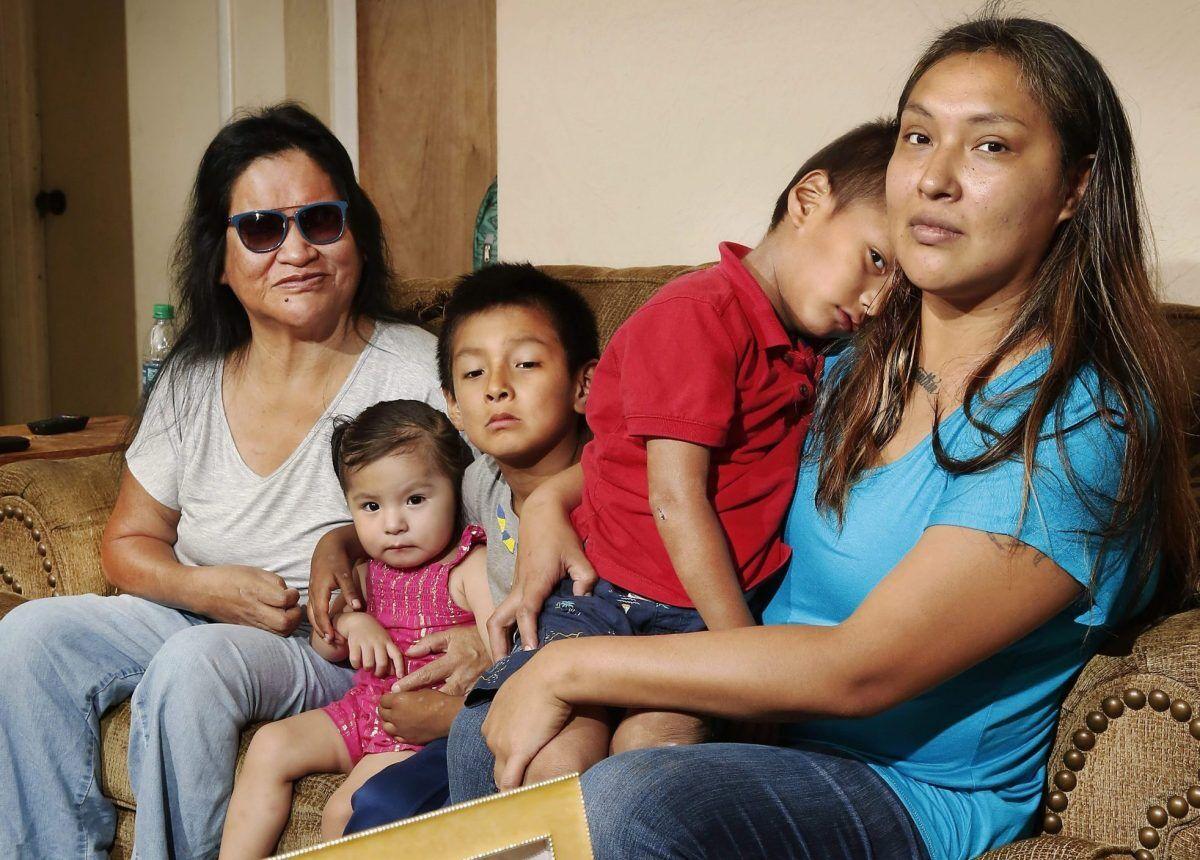
The day she realized her daughter was missing, Ida Beard’s mother went to the police.
It isn’t a crime for someone to leave town if they want to, officers said. Maybe she’ll come back, she was told.
She never did.
According to family members, they reported her missing in late June 2015, but the El Reno Police did not open an investigation and start searching for Beard, a citizen of the Cheyenne and Arapaho tribes, until two weeks later. According to El Reno Police Department, her case was opened on July 15. During that two-week window, family members started asking friends and neighbors if they had seen Beard.
A new law that goes into effect this week aims to give the state’s Native American families like Beard’s a more coordinated pursuit of justice.
Ida’s Law, named for the mother of four who was 29 years old when she went missing, prompted changes within the state’s top law enforcement agency. An agent now tracks and investigates cases of missing and murdered Ida Beard disappeared in the summer of 2015, at the age of 29. An agent now tracks and investigates cases of missing and murdered indigenous Oklahomans. A victim advocate now supports their families.
But progress will be slow due to a lack of funding.
And because crimes against Native Americans often go unreported, the number of cases involving indigenous Oklahomans is unknown. Recent estimates show that at least 220 Native American Oklahomans are missing.
How Ida’s law came to be
Senate Bill 172 was signed into law in April to help knock down some of the hurdles native families face when their loved ones are murdered or go missing. The law requires Oklahoma State Bureau of Investigation to secure federal funding to establish an office of liaison and create a database to keep up with these cases.
Families are uncertain whether to report these cases to local police, tribal law enforcement or federal authorities. Now, families can report directly to the state’s Office of Liaison for Missing and Murdered Indigenous Persons.
Ida Beard’s cousin LaRenda Morgan, who also is the governmental affairs officer for the Cheyenne and Arapaho tribes, worked with State Rep. Mickey Dollens, D-Oklahoma City, and State Sen. Paul Rosino, R-Oklahoma City on the legislation.
In 2018, Morgan ran against Dollens for a seat in the state House. Though Morgan lost, the two stayed in touch. For three years after Beard’s disappearance, Morgan shared her cousin’s missing persons flyer on social media.
Dollens asked what he could do to help after seeing one of Morgan’s posts. They spent the next two years drafting legislation.
There is no accurate count of missing and murdered indigenous people — more specifically with women — anywhere in the country, according to a study by the Urban Indian Health Institute. For instance, the study cited 5,712 reports of missing and murdered indigenous women as of 2016. Only 116 were reported to the Department of Justice.
Complicating factors include confusion about whose jurisdiction the missing cases fall under, a lack of trust between indigenous families and police, and misclassification of the missing person.
The new database required by the law is designed to properly document those who go missing while the agent acting as the liaison will start investigating the cases and meeting with tribes.
Ida’s Law comes into effect just two months after travel influencer Gabby Petito’s case captivated the nation. Petito’s fiance returned alone to their Florida home from the couple’s cross-country van trip, then disappeared days after Petito’s family reported her missing. Her remains were found in a national park. Authorities deemed strangulation as her cause of death. Remains matching her fiance’s dental records later were found in a Florida park.
The story sparked debate about how news outlets focus coverage on missing white women while oftentimes not giving women of color the same spotlight and energy.
While Ida’s Law aims to improve coordination between tribal, state and federal agencies, it does not remove the complexity that ensues when crimes are committed against tribal members or on tribal land.
A 2020 Supreme Court decision and the governor’s contentious relationship with the tribes add to the challenges.
The impacts of McGirt versus Oklahoma on the state’s judicial system remain unclear more than a year after the U.S. Supreme Court ruled against the state. The case determined that the state has no jurisdiction over crimes committed by or against Native Americans on tribal lands.
In August, Stitt said during a speech in Tulsa that the ruling “creates a public-safety nightmare for victims and law enforcement.”
It’s not always clear which law enforcement agency is responsible for investigating crimes against tribal members, OSBI spokeswoman Brook Arbeitman said. That confusion can delay investigations, jeopardize evidence collection and witness interviews, and leave grieving family members without support.
“It’s so complicated, they’re almost revictimized by jurisdiction,” Arbeitman said.
The agency plans to launch an entire department dedicated to tracking and investigating these cases and supporting the families of Native American victims.
Lawmakers did not direct any state funding toward the effort, leaving the agency to rely on Oklahoma tribes and federal grants to expand support for these cases. For now, the OSBI has assigned two employees to work on the cases part-time, while also fulfilling other responsibilities.
People doing the work
This summer, OSBI special agent Dale Fine was assigned to serve as the tribal liaison under Ida’s Law. In addition to his ongoing investigations, Fine is responsible for compiling a list of unsolved cases involving missing and murdered Native Americans. So far, he has compiled a few dozen cases being investigated by OSBI and local and tribal law enforcement. Beard’s case is already on the list.
Fine, a member of the Cherokee Nation who has been an OSBI agent for nine years, is contacting the investigators working those cases to offer assistance. The OSBI can provide fingerprint and DNA analysis, help log information into the missing persons database or add an extra pair of eyes to a case that’s gone cold.
Christy Pata, who has been supporting victims’ families at OSBI for seven years, now has the added responsibility of helping Native American families as Ida’s law brings attention to their cases. She provides updates about the case, connects families to support groups, provides funding for funeral costs, and accompanies families to court hearings.
One mother called Pata to find out when she could get her daughter’s engagement ring back. It had been taken as evidence because there was blood on it. Another woman called a month after her brother was fatally shot and asked “what do I do?”
But the biggest challenge for Pata and Fine will be developing trust between law enforcement and members of Oklahoma’s 39 tribal nations.
“It’s a trust issue,” Pata said. “They don’t automatically believe their case is going to be looked at the same as a non-Native case.”
Sometimes they’re right
Pata, who often travels to rural parts of the state to support families, said she has heard prejudiced comments made about Native Americans by the people who are responsible for solving these cases.
Despite Stitt’s Cherokee Nation citizenship, his actions toward the tribes fuels harmful perceptions, said Adams-Cornell of Matriarch.
“It is a travesty that our governor is continually attacking the sovereignty of our tribal nations because we know that when our tribal nations are strong, our state is strong too,” Adams-Cornell said.
Relationships began dissolving shortly after Stitt took office when he proposed increasing the fees tribes pay to operate the state’s casinos, which resulted in three tribes suing Stitt.
The governor has called the McGirt ruling a threat to Oklahoma’s future. On Wednesday, his office emailed Oklahoma Watch a statement that read in part, “The real travesty is the effect the McGirt ruling has had on law enforcement’s ability to keep all four million Oklahomans safe, especially Native victims. This is not about Kevin Stitt versus the tribes. It’s about justice, fairness, and equal protection under the law.”
In July, Stitt walked out in the middle of a forum about the McGirt decision, which was led by a panel that excluded tribal leaders. An angry crowd booed the governor and chanted “shame on Stitt” as he left through a back door.
Morgan, Ida’s cousin, and several tribal members were present in April when Stitt signed Ida’s Law, which Stitt called “an example of how Oklahoma succeeds when the state, tribes and our federal partners all work together.”
Ida’s law
After El Reno police opened an investigation into Beard’s disappearance, only Beard’s mother and a friend, who was the last to see her, were questioned. No one else was interviewed until years later when a new detective took over the case.
By then, the house where Beard was last seen had new tenants and renovations, diminishing any remaining chance to search for evidence.
But the department’s search for Beard continues. El Reno’s Assistant Police Chief Maj. Kirk Dickerson said interviews related to Beard’s case were conducted on Wednesday. Dickerson joined the department in 2018, three years after Beard went missing.
“We are still actively attempting to locate Ms. Beard,” Dickerson said. “I hope we find her somewhere sitting in a rocking chair on a front porch somewhere saying, ‘I just didn’t want to talk to you guys.’ Until then, we’re going to keep looking for Ida.”
Although the new detective looks at Beard’s case weekly, evidence and witness accounts have dwindled over time, along with the family’s hope of finding their loved one.
“Working on this has just helped me feel like I’ve done something,” Morgan said. “Ida, she’s not here. But it just kind of helped alleviate that helplessness feeling. Also it gave other families an outlet and a time to voice their concerns about their missing family members.”
The law requires federal funding to be secured by Jan. 1, 2022. Despite the looming deadline, Morgan said she’s confident the law will be effective, with or without the money.
“You know, it’s time to let go,” Morgan said. “There’s nothing more for me to do. I completed what I set out to do and I’m happy with it.”
For families seeking assistance, Fine can be contacted at OSBI’s Northeast Regional Office by calling (918) 582-9075 and Pata can be contacted at OSBI Headquarters by calling (405) 848-6724. Both can be emailed at [email protected].
Oklahoma Watch is a nonprofit, tax-exempt, 501(c)(3) corporation whose mission is to produce in-depth and investigative journalism on public-policy and quality-of-life issues facing the state.
Support local journalism.
We are making critical coverage of the coronavirus available for free. Please consider subscribing so we can continue to bring you the latest news and information on this developing story.
source: https://www.enidnews.com/news/state/new-law-aims-to-boost-justice-for-indigenous-oklahomans/article_47addf9c-3db3-11ec-a8ad-c7837f3fd4c4.html
Your content is great. However, if any of the content contained herein violates any rights of yours, including those of copyright, please contact us immediately by e-mail at media[@]kissrpr.com.