


NY food scrap law to take effect Jan. 1 - Times Union
Potato peels, onion tops and other unused or untouched foods from big businesses will need to be properly composted or donated by January 1, 2022, per a new state law intended to help cut greenhouse gas emissions generated by food waste.
The New York State Food Scraps Recycling law, passed in 2019, requires businesses and institutions that generate an annual average of two tons of unused food per week to donate excess edible food and recycle all remaining food scraps if they are within 25 miles of an organics recycler, like a composting facility or anaerobic digester.
The law will be fully implemented in the new year, and large generators of food scraps had the right to petition the New York State Department of Environmental Conservation (DEC) for a one-year waiver due to undue hardship.
Right now, the law impacts restaurants, grocery stores, hotels and motels, colleges and universities, malls, event centers and other large generators of food scraps. It excludes hospitals, nursing homes, adult care facilities, farms and K-12 schools.
Many Hudson Valley colleges and grocery stores say the new law should not pose an undue burden as they have already been composting for some time now.
“I think the law was written as a starting point,” said Josephine Papagni, co-owner operator of Ulster-based Greenway Environmental Services, who started collecting food scraps in 2000. “Many of those who are generating two tons a week are really already collecting and sending their food waste to be composted. The law creates awareness for those few who don’t know, and sets the stage to make sure we have adequate food waste processing resources.”
Approximately 40 percent of the food produced in the U.S. goes uneaten, while an estimated 2.8 million New Yorkers are food insecure, according to the DEC. Without a law like this in effect, some businesses and institutions could continue to bring excess edible food and food scraps to a landfill, where their decomposition produces the greenhouse gas methane.
Turning waste into compost or animal feed
In the Hudson Valley, Ulster County was one step ahead of the legislation by passing its own local law in 2019 called the “Food Waste Prevention and Recovery Act,” which required large food scrap generators to separate food waste from the general waste stream and arrange for its reuse as animal feed or compost.
The county will even make the requirements more stringent: the two tons per week average will become a minimum of just half a ton per week by July 1, 2023.
“I see the benefit of tiering it at the higher level right now, and then beginning to change those levels and bring more and more people into the fold,” said Papagni.
Locally, this law affects area colleges like Bard College, SUNY New Paltz and Vassar. Each of these three say they have already been composting with services like Greenway or something similar.
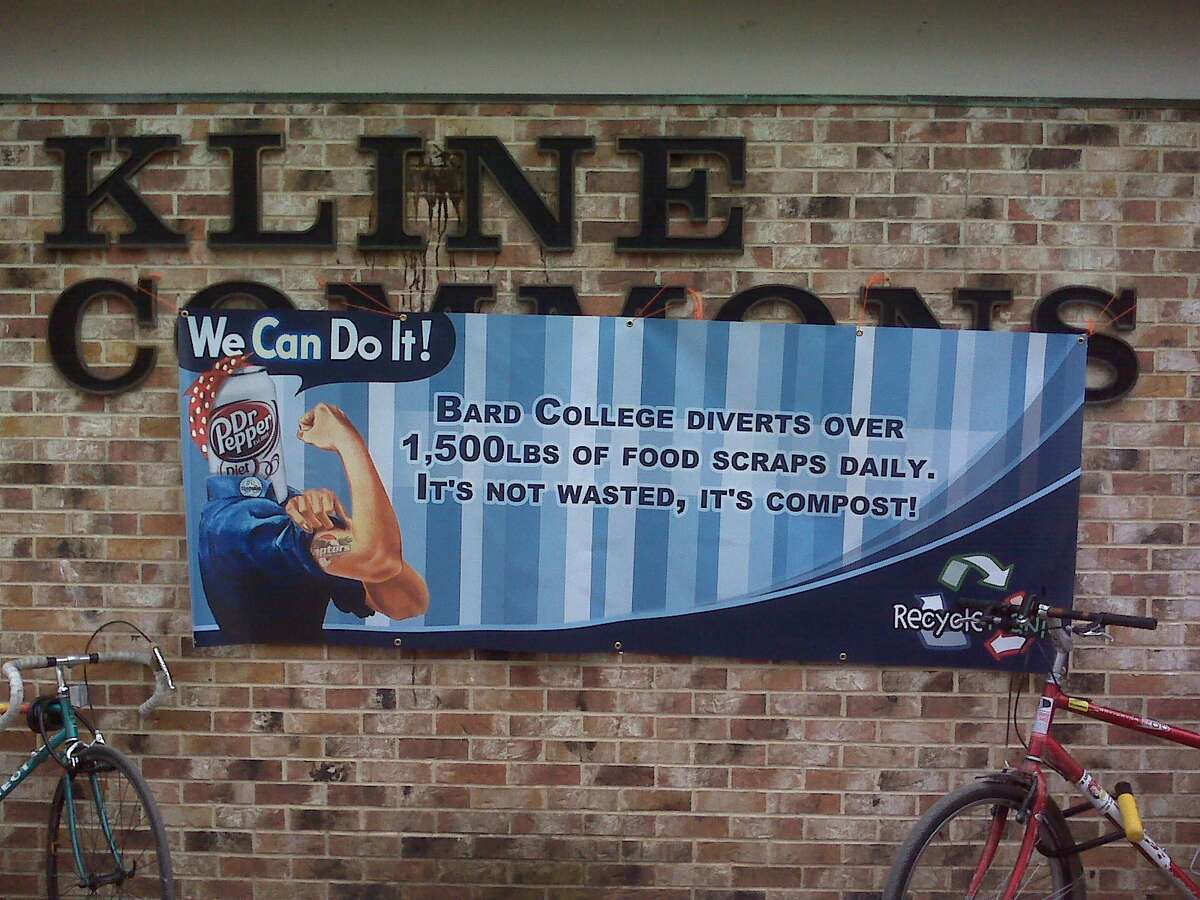
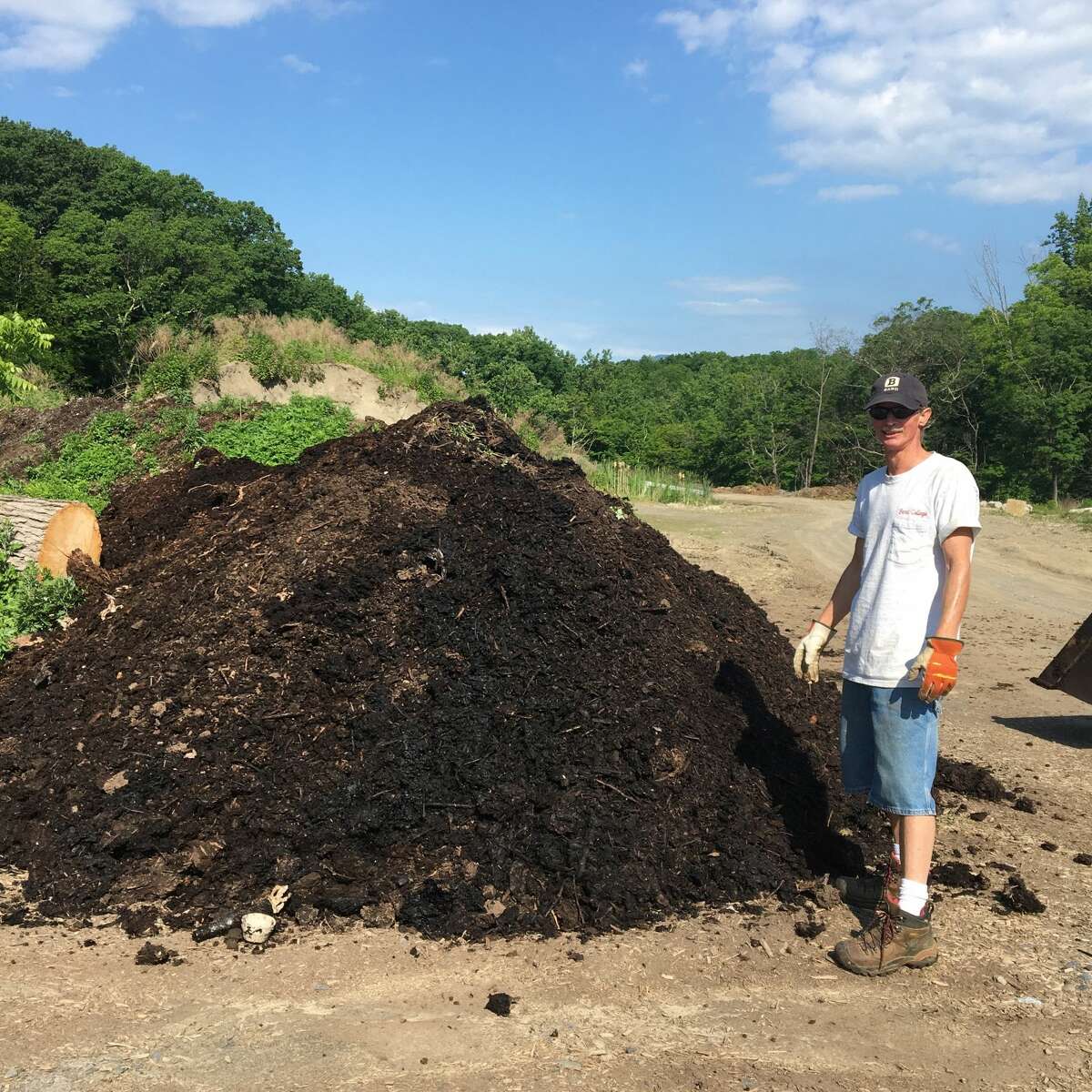
Vassar, for example, sends an average of 150 tons of food scraps annually to a composter for reuse as fertilizer. Bard, like Mohonk Mountain House, has a registered composting pile on site that diverts 1,500 pounds of food scraps a day from the landfill.
“It’s like a triple win – it helps lower our carbon emissions while saving in our wallets and helping people too,” said Laurie Husted, Chief Sustainability Officer at Bard College. “This is a great opportunity to question the systems we’re a part of and to think can we do things differently, and that’s what a law does. I’m very pleased it’s here.”
Community Compost Company, based in Kerhonkson, said they have received more inquiries from food waste generators with the law’s implementation around the corner.
“If businesses or organizations already had sustainability initiatives or have been aware of the benefits of composting, they’re on board with the process already,” said Molly Lindsay, Director of Operations at Community Compost Company.
Now, those who may not have a full plan in place have reached out for assistance. For example, Tops Friendly Markets in New Paltz is one of their new clients who is switching from a different composting company.
When it comes to donating edible food, most institutions and businesses have systems in place for that, too. SUNY New Paltz works with FeedHV, which services a network of 28 food recovery organizations.
“Anything we have in our main dining hall that is completely untouched and not used, we give to them, and they repurpose it with food kitchens or other organizations that deal with prepared food,” said Steven Deutsch, Executive Director of Campus Auxiliary Services at SUNY New Paltz.
Food Bank of the Hudson Valley also accepts food donations, which they then distribute to 400 member agencies, including food pantries, homeless shelters, schools, senior centers and more. The organization itself also will have to comply to the new law when it comes to donated food that they cannot redistribute. Food Bank of the Hudson Valley Director Sara Gunn said they have been composting for a number of years and work with local pig farmers who take their organic waste to create a sustainable operation.
A spokesperson from Hannaford Supermarkets also said all 10 stores in the region are already in compliance with the new law, with each store working with local food pantries to regularly donate meat, produce and grocery items.
The DEC will publish a list of designated food scrap generators for 2023 by June 1, 2022. Every year moving forward a revised list will be published in June for the following year. Businesses and institutions that are designated food scrap generators will have to supply an annual report form accounting for the excess food they receive.
“I don’t know if this bill is going to make an immediate visual change, but I do know it’s going to create awareness, set the stage, test our market, and see can we handle all of the organic waste that is in the state,” said Papagni.
— Six NY prisons to close, including Downstate Correctional Facility
source: https://www.timesunion.com/hudsonvalley/news/article/NY-food-scrap-law-to-take-effect-Jan-1-16612789.php
Your content is great. However, if any of the content contained herein violates any rights of yours, including those of copyright, please contact us immediately by e-mail at media[@]kissrpr.com.