


San Francisco Surveillance Law May Face Referendum - Bloomberg
The measure paved the way for regulating privacy in other cities. Now Mayor London Breed wants to carve out broad exceptions for police as part of a crime crackdown.
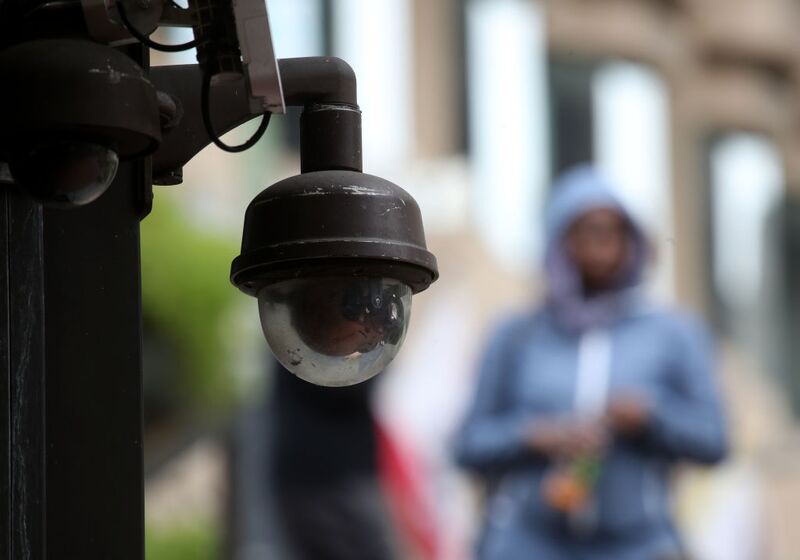
In 2019, San Francisco passed a landmark ordinance regulating government surveillance and became the first of several cities to start mounting guardrails against government abuse of technologies like facial recognition. It’s now the first to face a challenge from within City Hall.
This month, as part of a broader crackdown on crime, San Francisco Mayor London Breed proposed a ballot measure for the June election that would carve out broad exceptions to the original ordinance and allow police to use real-time surveillance footage in certain situations without first seeking public approval. Almost immediately, five city lawmakers who supported the original more restrictive legislation mounted a counter-proposal, advancing their own ballot measure that would affirm its protections. In a statement, Breed said she’ll attempt to work with the city’s Board of Supervisors to pass legislation there, as a potential alternative to the ballot initiative.
The current ordinance requires city departments to disclose what surveillance technology they monitor — be it video cameras, drones, or gunshot detectors — to the public, and to submit detailed plans for how they’d use new acquisitions to the city’s Board of Supervisors for approval. There are exceptions to the rules, if departments believe real-time surveillance is needed to prevent grave injury or death.
San Francisco Police Chief Bill Scott argues these rules have hamstrung the police in the course of their investigations. “We can't continue to put the San Francisco Police Department at a disadvantage by prohibiting or needlessly complicating our access to industry-standard police technology when necessary,” Scott said in a statement.
The new ballot measure, which Breed filed last week, would allow the police to use surveillance technology temporarily without board approval under a wider variety of circumstances, including to investigate organized retail crime and riots. It would also allow the SFPD to use its own discretion to monitor real-time surveillance in neighborhoods that the chief designates as public safety crisis zones. The ban on city use of facial recognition, an element of the ordinance that dominated headlines in 2019, would stay unchanged.
Breed said in a press release that loosening the rules would allow officers to better execute her plan to address drug dealing and use in the Tenderloin district, and could have allowed police to react more swiftly to recent reports of crimes at luxury stores in Union Square, when police were told not to monitor live video fees while the incidents were occurring. “We can give our law enforcement the tools they need, while also maintaining strong oversight and safeguards to ensure these tools are used appropriately to address dangerous criminal activity,” she said.
Supporters of the original ordinance argue that there’s already enough leeway written into the existing law to respond to serious threats to public safety, but that the department has never even tried to comply. In the two and a half years since the ordinance was passed by San Francisco’s Board of Supervisors, the San Francisco police department has not submitted any proposals for the use of surveillance technology.
“There’s a clear process for them to put forward a proposal for the kind of surveillance system they want to use, to have a public debate about it, and to make sure the voices of residents are heard. And they have failed to do that for nearly three years,” said Matt Cagle, a staff attorney for the American Civil Liberties Union of Northern California. “So it’s really a question of like, why haven’t they done that? And why are they instead trying to gut the law? And do an end-run around public oversight with this measure?”
Advocates argue that the battle of the ballot measures obscures a more pressing point: that the police department has not yet complied with the ordinance as it was written, and that widening loopholes further will open the door to civil rights violations.
Other cities in the Bay Area passed their own surveillance ordinances shortly after San Francisco did, and cities elsewhere, like Nashville and Cambridge, followed. Until now, there hasn’t been a head-on challenge like this, says Brian Hofer, a privacy advocate who has co-authored several such surveillance ordinances. “We’re certainly concerned that there could be a ripple effect,” he said.
Though many of the policies have been adopted enthusiastically, ensuring compliance has been harder: Hofer is suing Oakland’s police department for its alleged failure to comply with its automated license plate reader retention policies, and for sharing data with the FBI.
The strength of San Francisco’s regulation faced its first test in 2020, when SFPD tapped a network of private surveillance cameras operated by a local business improvement district at the height of the Black Lives Matter protests. Three activists, represented by the ACLU of Northern California and the Electronic Frontier Foundation, a privacy rights nonprofit, have alleged in a lawsuit that the police violated the ordinance by secretly monitoring protestors without first following any public engagement process.
It’s a tactic that civil liberties advocates say has a chilling effect on free speech, and one that was used by police departments across the country: In San Diego, police used smart streetlights to investigate Black Lives Matters demonstrators for crimes allegedly committed during protests; in L.A., the Electronic Frontier Foundation found that police requested Ring camera footage of activists. The difference was, plaintiffs argue, that in San Francisco there was supposed to be a mechanism in place to ensure the public knew it was happening, and had a chance to prevent it.
“This law has been operating in the background and working — many other departments have complied with it,” said Cagle: The board of supervisors has approved at least 19 use policies by city agencies aside from the police department since the ordinance was instated. “But the police department here decided to ignore it and just turn on a surveillance system and point the cameras at social justice activists.” An attorney for the city of San Francisco is arguing that while the police did view the cameras for a period of more than a week, they acted within the scope of the ordinance. After a hearing this month that ended inconclusively, another hearing in the case is scheduled for February.
Mukund Rathi, a fellow at the Electronic Frontier Foundation, says Breed’s ballot measure would make it easier for the SFPD to rely on such surveillance mechanisms without constraint. “Whether or not it’s a coincidence” that the public debate and the lawsuit have come to a head at the same time, he said, “it does seem to me that they are persisting in this course of: We don’t want to be subject to any restrictions by the board or by the community.”
source: https://www.bloomberg.com/news/articles/2022-01-26/san-francisco-surveillance-law-may-face-referendum
Your content is great. However, if any of the content contained herein violates any rights of yours, including those of copyright, please contact us immediately by e-mail at media[@]kissrpr.com.