


The beer distributor is Pa. Five years after the law transformed the sale of liquor, it was forced to adapt. "We were probably rutted" | Work - Pennsylvanianewstoday.com
Five years ago, things looked tough for Pennsylvania beer distributors.
The newly approved Act 39 allowed beer to be sold in grocery stores and convenience stores, ending decades of beer sales monopoly by beer distributors. With the exception of the 6 packs purchased at the bar, the only place to buy beer in Pennsylvania was an independent retailer selling cases and barrels.
“At that point the beer sold,” said Sean Burke, manager of Hempfield Beverage in Landisville.
As a result, changes in the law seemed to be an existential threat to beer distributors. Aaron Zimmer, Lancaster’s liquor license lawyer, said: “And I think the reality is a little different.”
It may be an understatement.
Concerns about beer distributors having a large number of new competitors have become a reality, but concerns that poor sales have forced them to shut down have not been realized. Currently, there are 29 beer distributors in Lancaster County, the same number as in 2013. In fact, more than ever before, with the help of the new ability to sell singles and 6 packs, boosted by home drinking during a pandemic, the store has been redesigned and focused on craft beer and an assortment of beer vendors. I’m saying it’s working.
“Yes, you can buy it elsewhere, but if we do it well enough, we can still compete,” with his aunt Karen Harley. Neil Fulkerson, who owns a root beer distributor at Mount Joy, said annual sales grew by double digits.
Full Carson, district director of the Pennsylvania Malt Beverage Distributors Association, was forced to make owners more practical by tracking more products and creating a better customer experience. He said he now has more opportunities to succeed.
“As long as your store is well presented, you will get customers for the beer store. The grocery store will get another customer,” he said.
New law overturns old business
The legislative amendment, which came into force in August 2016, follows years of efforts to privatize liquor sales in Pennsylvania. The updates built into Act 39 did not lead to privatization, but were the largest updates since the 1930s.
In particular, Law 39 stipulates that restaurant liquor license holders may sell takeaway wine. Some grocery stores used to sell beer, but this change makes it more attractive to buy a restaurant license and turn some of the stores into mini-restaurants focused on selling beer and wine. It became a target.
Over the last five years, grocery beer cafes have become ubiquitous. Giant, the county’s largest grocery store, currently sells beer in six of its twelve locations in Lancaster County. Weiss Markets sells beer in 9 of the 11 stores here.
The 2016 law also clarified that if a convenience store that sells gas sells beer from another region, it can actually sell beer. Sheetz sold beer claiming that the store was actually a restaurant, but the change overturned the long-standing ban on selling beer and gas in the same place. Sheetz is licensed to sell all but one liquor if it has 17 stores in Lancaster County.
“Five years ago, it was one of the biggest changes that happened in the space for a very long time. And now they’re in big competition. Consumer buying is changing and it’s We need to be prepared, “said Carson Baker, Secretary-General of the Pennsylvania Malt Beverage Distributors Association.
For beer distributors, this change caused fear because they felt it undermined their business model.
Don Henley, owner of Manor Shopping Center’s Brewers Outlet, told Lancaster Township’s supervisor at a hearing in April 2016, “I’m a longtime business owner in this town. To save my business. I’m looking for your help. ” A nearby Giant liquor sales license.
“The motivation behind them is to sell beer, wine and spirits at the grocery store on the shelf next to soda and juice, and shut down a small family-owned business,” Henry said.
The Lancaster Township supervisor initially rejected the request from the giant, but the grocery store appealed the ruling and was finally able to open the beer garden. Henry, who declined to comment on the story, confirmed that the sale of his business was currently pending.
Legislative lifeline
Act 39 seemed full of bad news for beer distributors, but the law that came into force five months later proved to be a lifeline. In January 2017, Law 166 specified that beer distributors could sell 6 packs and singles, and removed the restriction of selling only cases and barrels.
“They needed some additional flexibility to compete, and I think they got it,” said handling some deals for distributor license holders. Zeamer said. “Beer vendors play a really important role, and almost all distributors, whether willing or not, are looking to sell a fair amount of craft beer (and) they are pretty profitable. There is a possibility.”
Zeamer believes that beer distributors with lost revenues for sale at grocery stores and convenience stores are being supplemented by new revenues from the sale of 1-pack and 6-pack. Alcoholic beer slash, a new product made possible by the legislative changes, also proved a significant increase in revenue, he said.
According to Zeamer, long-time beer distributors currently selling their businesses may be benefiting from higher prices due to increased overall revenue and the value of the license itself. It is said that it is expensive.
“I think the revenue they generate and the sales they have is pretty good, and that helps them maximize the value of their business. It’s a good time to retire.” rice field.
“We were probably in a rut”
For beer distributors, retaining and attracting customers who could suddenly buy beer elsewhere meant making the store more attractive.
At Zern Beverage in Mannheim, co-owner Tom Zern said he brought in more types of beer, emphasized customer service, installed new lighting, introduced a new air conditioning system and rebuilt the floors of the retail area. rice field. The change has brought in more customers, Zern said, and estimates that the number of customers has nearly doubled in the last decade.
“We were probably rutted because we sold case beer and barrels. That’s it. Zern, whose father started his business in 1948, said,” We need to do nothing more to attract more people. I didn’t. I had to change the way beer was sold. “
Hempfield Beverage’s manager, Burke, said the store has radically expanded its choices over the past five years and is now “better than ever” despite new competition.
Marticon Roy, a 41-year-old electrician from Landisville, who bought beer at Hempfield Beverage last week, said: “And Sean can order you almost anything. He ordered the beer I tried at a bar in Philadelphia when my wife and I went there.”
Rich Schaffer of Landisville, another customer of Hempfield Beverage, said he likes to be able to create his own 6 packs from over 200 beers in the mix mix and match section of the store.
“Diversity is probably huge,” sadd a 38-year-old HVAC technician. “If not here, they can get it for you. What they have in the grocery store is what they have.”
Drink wine while drinking beer at a grocery store
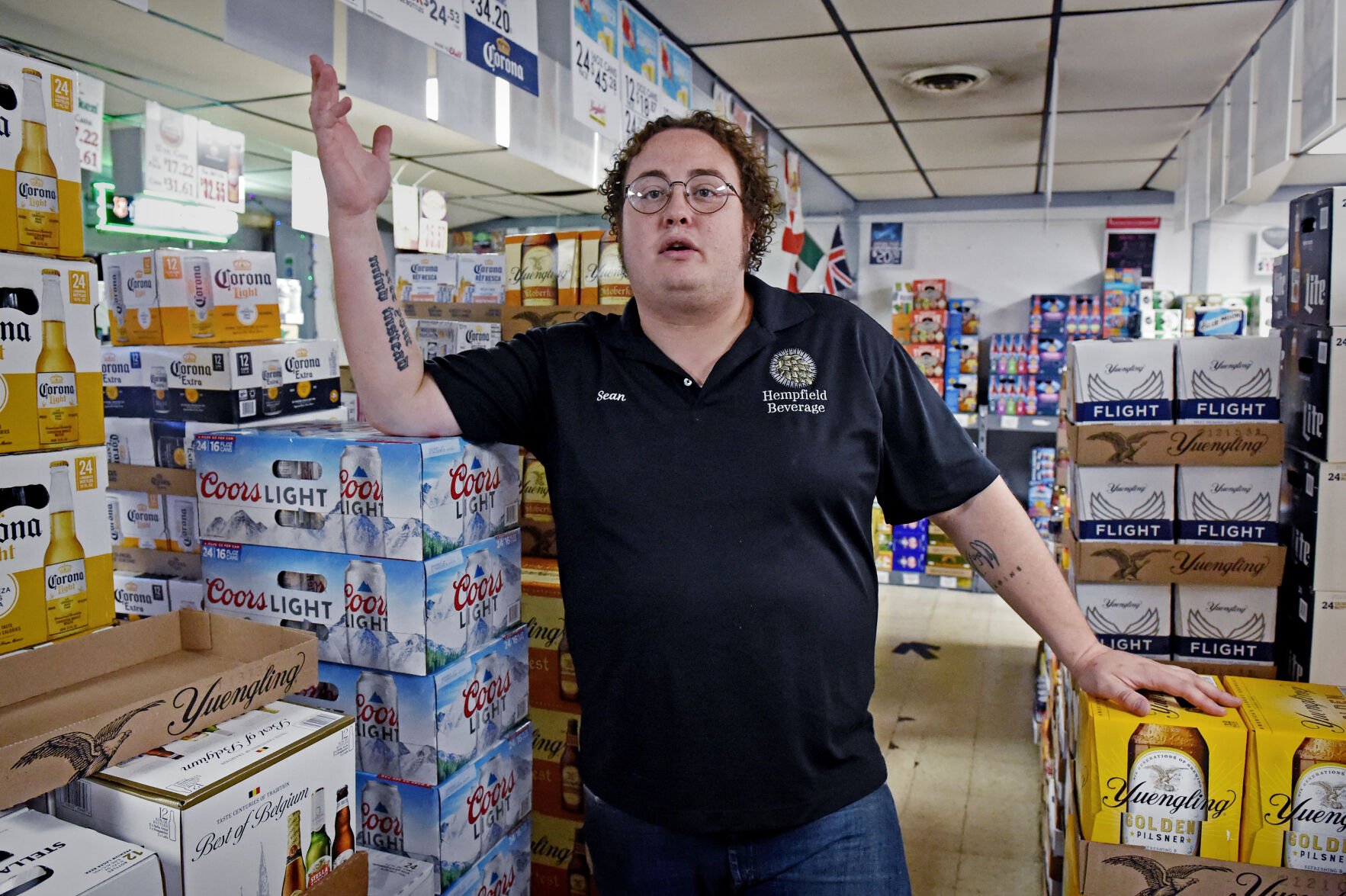
Sean Burke, manager of Hempfield Beverage, talks about selling beer.
Brain Shahan | Staff Photographer
As beer distributors add more types of beer in response to what Wyeth Market called “Beer Cafe” and Giant called “Beer Garden”, grocery stores turn more shelf space into wine. I was spending.
Jeff Metzger, publisher of the regional weekly food trade news, said wine sales are certainly more favorable to grocery stores, so instead of expanding and rotating beer options, limited shelf space He said he spends a lot of it on it, of course.
“As a category, wine is bigger than beer in terms of growth,” he said.
Hempfield Beverage Manager Burke said he recently noticed far more wine in grocery stores than beer. This is one of the reasons why we no longer have to worry about grocery competition.
“We’ve always found ways to do better than before, and it’s certainly better than what grocery stores are trying to do,” he said.
According to Burke, one small example of a practice that is more appealing to customers is most grocery stores and convenience stores.
“I meet the same people here every day. It’s like Mayberry,” Burke said, referring to the fictional and intimate community of the Andy Griffith Show.
Increased pandemic sales
Beer distributors were rebuilding their stores in the face of competition, causing an unexpected surge last spring during a forced outage aimed at delaying the spread of COVID-19. Beer distributors were considered an integral part of the business and were able to continue to operate.
“It was a fuss here,” said Hempfield Beverage Burke, who offered free local delivery for about six months at the start of the pandemic. “It was non-stop here. It was great.”
Eric Perone, whose family owns Neffsville beverages in Manheim Township, said it was difficult to maintain beer inventory early in the pandemic.
“Beyond COVID, it stood out. It was insane to anyone who sold any kind of beer during COVID, especially when liquor went offline,” Perone said. I am. “When I told you it was insane, it was insane.”
According to Fullcarson, the extra money earned by root beer distributors during the pandemic has helped bankroll expansions that almost double the size of the store. In addition to the extra income, the months-long run of beer exposed more customers to more beer, as well as recent upgrades to the store, including new shelves, lights and coolers.
“Our job is always to make it as great as possible,” said Fullcarson. “Even if they go to the grocery store, they’ll be back.”
The beer distributor is Pa. Five years after the law transformed the sale of liquor, it was forced to adapt. “We were probably rutted” | Work
Source link The beer distributor is Pa. Five years after the law transformed the sale of liquor, it was forced to adapt. “We were probably rutted” | Work
source: https://pennsylvanianewstoday.com/the-beer-distributor-is-pa-five-years-after-the-law-transformed-the-sale-of-liquor-it-was-forced-to-adapt-we-were-probably-rutted-work/238018/
Your content is great. However, if any of the content contained herein violates any rights of yours, including those of copyright, please contact us immediately by e-mail at media[@]kissrpr.com.