


U.K. Withdraws Top Judges from Hong Kong Over National Security Law - Bloomberg
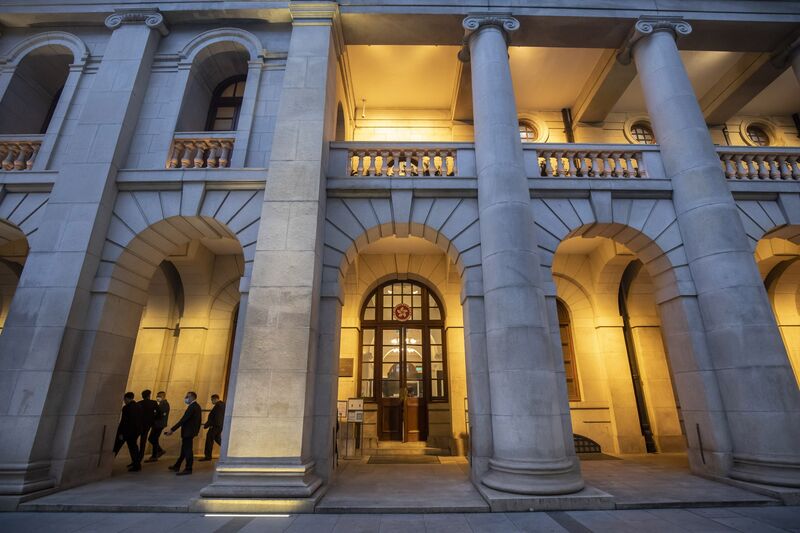
The U.K. will withdraw its top judges sitting in Hong Kong’s Court of Final Appeal, saying China is using its national security law to undermine fundamental rights and freedoms in the former British colony.
“We have seen a systematic erosion of liberty and democracy in Hong Kong,” Foreign Secretary Liz Truss said in a statement Wednesday. “The situation has reached a tipping point where it is no longer tenable for British judges to sit on Hong Kong’s leading court, and would risk legitimizing oppression.”
The U.K. has sent members of its Supreme Court to Hong Kong since the territory was returned to China in 1997, with the territory sticking to the English Common Law forming a key part of the “one country, two systems” agreement with Beijing. That has been credited with maintaining Hong Kong’s status as a global financial center after the handover.
But Britain argues that China’s security law violates that agreement, and has criticized authorities’ moves to crack down on dissent.
Security Law
Hong Kong “has shifted too far from the freedoms that we hold dear -- making free expression and honest critique of the state a criminal offense,” U.K. Justice Secretary Dominic Raab said in the statement.
In response, Hong Kong’s Justice Secretary Teresa Cheng wrote on her blog that Hong Kong’s judicial independence is “constitutionally guaranteed” and “will not be shaken.”
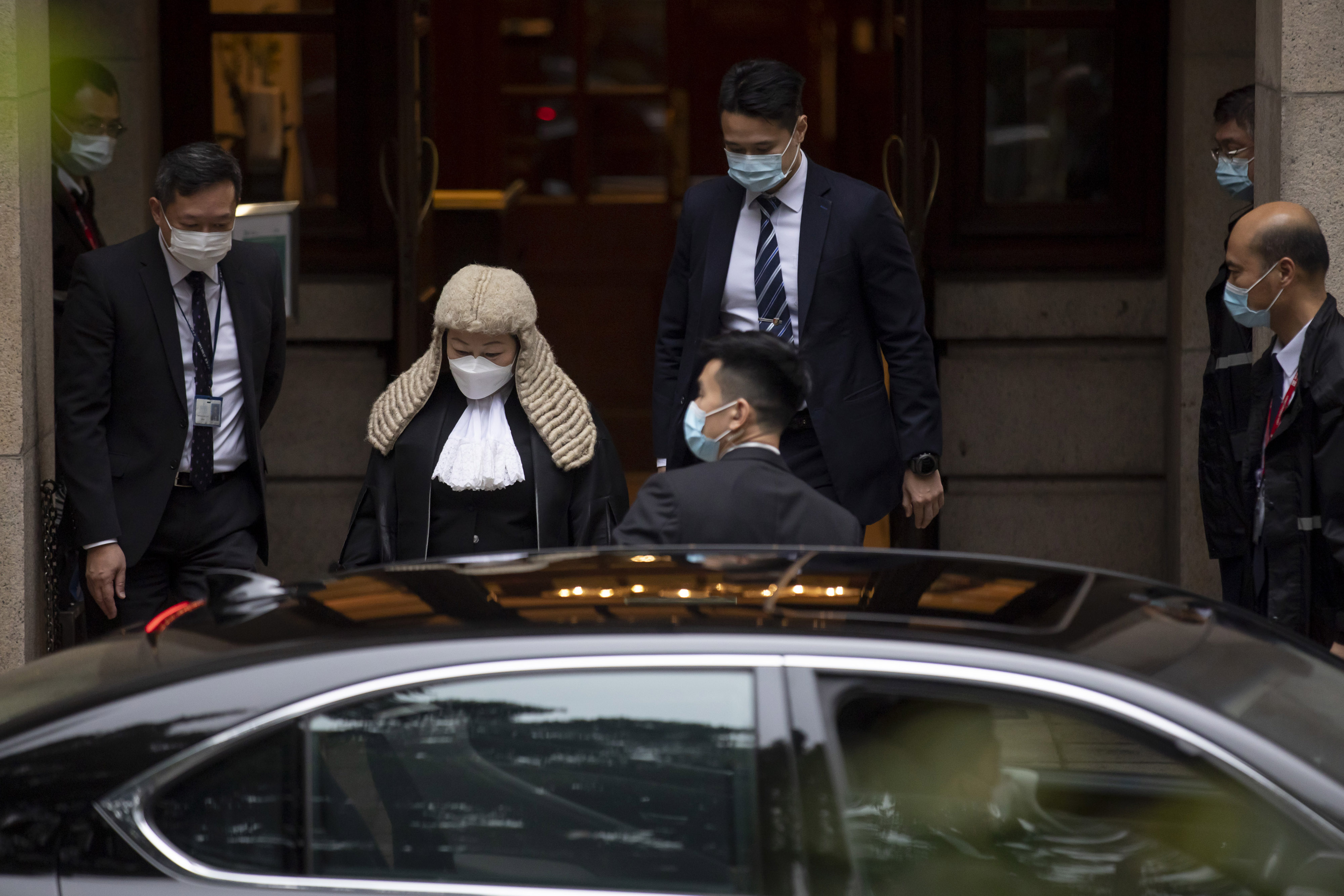
China’s sweeping security legislation, which asserts global jurisdiction for cases involving terrorism, secession, subversion and collusion with foreign powers, has major implications for the Hong Kong judiciary as it responds to the new law. Some prominent cases of pro-democracy activists, including Jimmy Lai and Andy Li, are currently working their way through the system.
The role of Britain’s two most senior judges, President of the U.K.’s Supreme Court Robert Reed and his deputy Patrick Hodge, carries risks for Boris Johnson’s government. Both resigned from their positions as non-permanent judges in the Hong Kong court following Wednesday’s announcement.
Controversial Cases
Reed’s involvement in the case of pro-democracy lawmaker Leung Kwok-hung -- known as “Long Hair” -- last September raised concerns that Britain’s most senior judge was advancing the Communist Party’s aims in Hong Kong.
Leung challenged charges emanating from his refusal to take a pro-Beijing oath of office at the legislative council, arguing that under freedom of speech laws it was his right to abstain. Reed and the four other judges ruled against him.
U.K. judges “cannot continue to sit in Hong Kong without appearing to endorse an administration which has departed from values of political freedom, and freedom of expression, to which the Justices of the Supreme Court are deeply committed,” Reed said in his resignation statement.
There are still five British non-permanent judges who serve on the court for one-month stints, though all are retired from the U.K. court system -- meaning they are free to decide whether to continue in Hong Kong.
— With assistance by Jenni Marsh, and Kari Soo Lindberg
(Updates with Hong Kong government response in sixth paragraph)
source: https://www.bloomberg.com/news/articles/2022-03-30/u-k-withdraws-its-top-judges-from-hong-kong-over-security-law
Your content is great. However, if any of the content contained herein violates any rights of yours, including those of copyright, please contact us immediately by e-mail at media[@]kissrpr.com.