


Yorktown Debates Changes to Solar Law | Yorktown, NY News TAPinto - TAPinto.net
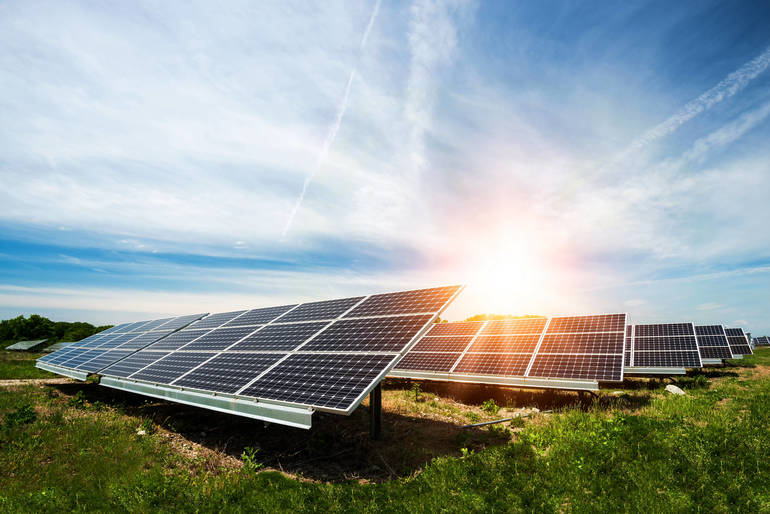
YORKTOWN, N.Y. – The topic of solar systems drew impassioned pleas from residents and developers last month at a Town Board meeting, where elected officials were debating making changes to a law that has helped attract more than a half-dozen solar projects in town.
The most controversial project, proposed by Con Edison Clean Energy Businesses, would result in the removal of more than 1,500 trees from a 16-acre property on Foothill Street in Mohegan Lake.
Other projects, in development or already approved, include:
• Arcadia Farm (Baptist Church Road, Yorktown Heights)
• Dell Avenue (Ossining)
• Kitchawan Preserve (Kitchawan Road, Ossining)
• Old Hill Farm (East Main Street, Jefferson Valley)
• Strawberry Road (Mohegan Lake)
• Yorktown Rehabilitation and Nursing Center (Catherine Street, Cortlandt Manor)
The influx of solar projects caused the Town Board to revisit its relatively new law, which was developed in 2020.
The proposed changes address things like setbacks, landscaping, and height. It would also require more land to build solar systems in residential areas. (Changes below.)
To some, the changes didn’t go far enough.
“We’re talking about thousands of trees being cut down,” said resident Dan Strauss at the public hearing. Any law that allows that to happen flies in the face of Yorktown’s status as a Tree City USA, he added.
Resident Jay Kopstein said the law should differentiate between “large” solar farms and “mega” solar farms. He also wanted to know who benefits from the energy being produced.
“These are questions we need answers to before we saddle our community with industrial-sized solar farms,” Kopstein said.
Most concerning to resident Paul Moskowitz is that the law, as currently written, allows large-scale solar farms in residential areas as an “as-of-right use.” The law gives the Planning Board almost no discretion in reviewing plans that meet the zoning requirements.
“The Planning Board has limited authority,” Moskowitz said. “They can’t say your plan is abhorrent, we can’t stand this, don’t do it. The Planning Board has to say yes as long as the minimum requirements are met.”
FOOTHILL STREET
He referenced the above-mentioned Foothill Street solar project, which is currently being reviewed by the Planning Board. The board has expressed reservations about the project. At the Jan. 24 meeting, Planning Board member Aaron Bock said he felt “significant adverse environmental impacts remain unaddressed.” Chairman Rich Fon noted the difficulty the board is having because it is a “completely wooded piece of property” that would result in many trees coming down.
Planning Board member Rob Garrigan, however, said, “It seems to me the applicant has done everything they’ve had to do in order to comply with our current laws or tools.”
A public information hearing was held in April and the project was reviewed by a town-contracted environmental consultant. Following the close of the public hearing in January, the board wanted to seek more input from the Conservation Board before rendering a decision, drawing the ire of Joe Shanahan, vice president of real estate and permitting for Con Edison Clean Energy Businesses.
“To keep saying, ‘I’m concerned about the impact and I’m concerned about the adverse impacts’ and never citing a single one of them is just unfair,” Shanahan said. “And because this board can’t do it, now they want to open it up to everyone else to give them a chance to find something that’s adverse about the project.
“What’s adverse about this project and has been adverse about this project for over three years is we’re proposing to cut down 15 acres of trees,” Shanahan added. “That’s what’s adverse. We admit. If you can do this project on this site without doing that, we would. But we cannot.”
CHANGES TO THE LAW
The Planning Board, in its memo to the Town Board, said existing solar projects should be grandfathered into the new law, if it is approved. That idea was supported by Kathryn Hoenig, whose family is developing the Old Hill Farm site with a solar farm.
“My family has been working on this for over a year and a half,” Hoenig said. “It’s cost a lot of money. We’ve tried to be really respectful of the law as it exists today.”
The proposed changes to the law are:
• Require annual inspections for large-scale solar power systems to ensure compliance in regard to landscaping, screening, buffering, and more. The report would be sent to the town engineer’s office for review.
• The Planning Board shall require a bond to cover the cost of the system’s decommissioning (changed from may).
• Large-scale systems in residential areas must be set back at least 100 feet from the property line (increased from 50 feet).
• At least 5 acres of land is required to build a large-scale system in a residential area (increased from 2 acres).
• At least 2 acres of land is required to build a smaller-scale system in a residential area (increased from 1 acre).
• Residential ground-mounted solar systems can only be 10 feet high (reduced from 15 feet).
• Require a lockbox so emergency service personnel can access the site.
The law also would require a PILOT agreement with tax-exempt solar developers (Payment-in-Lieu-of-Taxes). The agreement would provide compensation for lost property tax revenues.
STRIKING A BALANCE
A week later at its March 1 meeting, the board recognized the tough decisions it has to make.
“There’s just not enough renewable energy to go around right now, and that’s where the rubber meets the road where we have this conundrum,” said Councilman Sergio Esposito. “You cut trees down because trees are the ‘archrival’ of solar. You can’t have both.”
The proposed changes would disqualify about 80 percent of residential property owners in Yorktown from building solar systems, according to information shared by Town Supervisor Matt Slater.
“People in the audience can shake their head all they want,” Slater said. “Those are the facts. Those are the numbers. They can go to the assessor’s office to look it up.”
Both officials said the idea to tweak the solar law, first proposed by Councilman Tom Diana, was a necessary move.
“I think we were pacing to a point where we were just going to be a community of solar farms,” Esposito said. “I think the changes to the law, the tweaks, are going to prevent that.
“For me, unfortunately, it’s too late for what’s on the table already,” the councilman added. “It wouldn’t be fair to pass something that’s retroactive. That’s my opinion.”
source: https://www.tapinto.net/towns/yorktown/sections/government/articles/yorktown-debates-changes-to-solar-law
Your content is great. However, if any of the content contained herein violates any rights of yours, including those of copyright, please contact us immediately by e-mail at media[@]kissrpr.com.